Yesterday’s election provided good news for teachers in Wilson County, as voters there approved a sales tax increase with a portion of the proceeds from increased revenue dedicated to increasing teacher pay. The Lebanon Democrat has more:
The sales tax in Wilson County will be going to 9.75 percent from 9.25 percent after voters overwhelmingly gave their OK Tuesday.
The referendum passed 58% to 42%, according to complete yet unofficial results posted by Wilson County Elections Administrator Phillip Warren.
The vote came as the result of a decision by the Wilson County Commission to put the issue of where to find new revenue to fund teacher pay to voters.
The move comes as Wilson County is feeling the impact of the national teacher shortage, driven in part by low pay for educators. Additionally, new reports indicate teacher pay in Tennessee has actually fallen over the last decade when adjusted for inflation. Wilson County also suffers from a pay scale tied to teacher value-added scores.
For more on education politics and policy in Tennessee, follow @TNEdReport
A state organization tasked with providing research on the operations of state and local government has released a report suggesting Tennessee’s school funding formula, the BEP, needs at least $1.7 billion to adequately fund public education in the state. TACIR — The Tennessee Advisory Commission on Intergovernmental Relations — released “K-12 Education Funding and Services.” Here are some notes:
* Report shows local governments spend at least $1.7 billion over BEP requirements.
* “Comparisons of BEP-funded to actual positions show that school systems often need to hire more staff than provided for by the formula” (Page 18)
* “In fiscal year 2018-19, the BEP funding formula generated a total of 62,888 licensed instructional positions, but school systems employed a total of 69,633 with state and local revenue.”
“Although the changes made in 1992 and since have resulted in substantial increases in funding to support the BEP, meeting local needs and the requirements imposed by the state and federal governments often requires more resources than the BEP funding formula alone provides. Consequently, state and local funding in fiscal year 2017-18 totaled $2.1 billion over and above what was required by the BEP formula, including a total of $1.7 billion in local revenue.”
“Given the ever evolving needs of communities in Tennessee and the likelihood that the BEP funding formula could better account for these needs, the Commission recommends that a comprehensive review of the components be made by the BEPRC or other designated state and local officials and other stakeholders to ensure that the BEP funding formula supports a commonly accepted basic level of education for Tennessee students.”
The TACIR report, showing a gap of nearly 7000 teachers, comes on the heels of a Tennessee Department of Education report indicating a “teacher gap” of 9000.
Additionally, the $1.7 billion identified by TACIR is slightly more than the $1.5 billion targeted by a group of legislators seeking to bring the BEP up to a level of adequacy.
For more on education politics and policy in Tennessee, follow @TNEdReport
Former teacher Kat Tipton writes in Education Week that free work is expected of teachers, and suggests it’s likely because a vast majority of educators are women.
When I was hired to be a 1st grade teacher, I was given absolutely no curriculum for reading or science. While my school did have a math curriculum, it was out of date from the brand new, controversial Common Core State Standards and did not match our assessments. Instead, I was told to plan with my colleagues.
This often led to me scouring the internet for good resources. While some coworkers were willing to share, they rarely sat down and explained what they were giving me, and I certainly never had the opportunity to observe them using it. I was in over my head and had no idea what I was doing.
However, there is a growing number of disdainful educators who are downright angry that teachers are daring to sell their materials on Teachers Pay Teachers. At a technology conference last summer, I heard a presenter loudly talking in the vendor expo center. I listened as he laughed and called TPT sellers the “whores of education.” In a session later that day, I learned about a website where teachers can upload their work for free for others to use.
Why are teachers expected to give away their hard work for free? The presenters in charge of the website explained that they were there to “help kids” and not themselves. I have seen this same sentiment on Twitter often. If you really cared about kids, you would just let people have the things you make rather than sell them!
But, is that fair? Do doctors who work with children give their medical advice away for free? Does Google look around, as it makes new technology for teachers, and say, “You know what? Let’s share all this with Microsoft. After all, it’s for kids!”? Can you think of a single other profession in which those in it are not given what they need to complete their job, are expected to make their own materials, and are then expected to just give those materials away to others?
No, the real problem here is that so many teachers aren’t given what they need in order to do their job—for kids—that they have to pay other teachers to get what they need. The lack of funding in our schools is shocking, and it’s no surprise that schools can’t afford up-to-date curriculum when many can’t even afford basic furniture or actual teachers.
More than three-quarters of public school teachers are women. Would we value the work done by teachers and sold online—and would we be less likely to call those who participate “whores”—if more teachers were men? The average public school teacher makes about $55,000 a year, and the majority have at least two degrees. If a teacher had a side job at American Eagle, would she still be a “whore”? Why is selling something related to teaching as a side job considered to be the worst thing a teacher can do?
Tennessee’s school funding formula, the BEP, is broken. It fails to adequately fund teaching positions. It fails to account for actual salaries paid to teachers. It fails to provide the money necessary to adequately equip schools. There’s simply not enough funding for nurses or counselors or other key support staff. Here’s one teacher talking about what a broken school funding system looks like.
Wow! This is what a CARING teacher looks like! This is what a FRUSTRATED teacher looks like! This is what a potentially FORMER teacher looks like! #MNPSWeHaveAProblempic.twitter.com/aV1iS2H5Bb
While some Tennessee lawmakers are pushing for a significant new investment in our state’s schools, new evidence suggests that a cash infusion is just what schools need to retain teachers and improve student outcomes.
Here’s the breakdown from Matt Barnum:
A newly published study based on several states shows that in the long run school spending increases substantially boost test scores and graduation rates https://t.co/oM6ctL3iRfpic.twitter.com/6WaQ41Vnjm
This tracks with a post I shared recently from We Are Teachers noting that a boost to teacher pay has a long-term impact on student achievement:
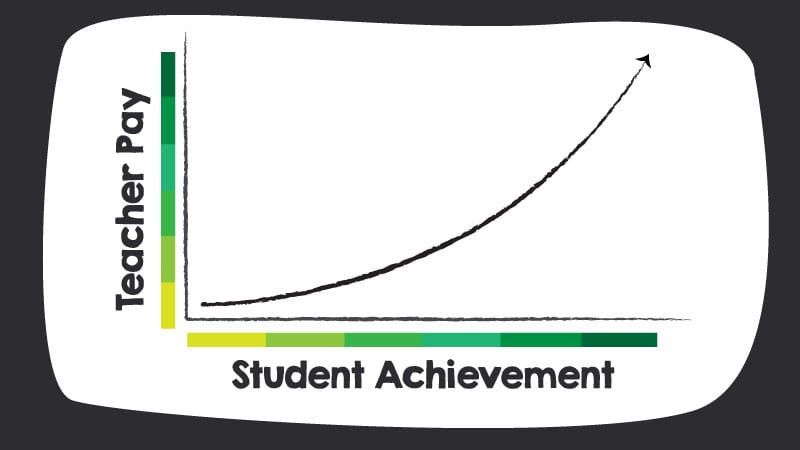
When teachers get paid more, students do better. In one study, a 10% increase in teacher pay was estimated to produce a 5 to 10% increase in student performance. Teacher pay also has long-term benefits for students. A 10% increase in per-pupil spending for each of the 12 years of education results in students completing more education, having 7% higher wages, and having a reduced rate of adult poverty. These benefits are even greater for families who are in poverty.
Tennessee needs $500 million just to properly staff schools — and that’s just teachers. We need more to add the proper number of counselors, nurses, and other key support staff.
Our teachers need a raise — Tennessee teachers earn about $2400 less than they did back in 2009 when salaries are adjusted for inflation.
This new round of research backs up what those on the front lines of public education will tell you: Money matters. It matters a lot.
State Senator Jeff Yarbro offers thoughts on Gov. Lee’s education budget.
“The governor‘s budget is not enough to even do a 4 percent increase for teacher pay. It’s tinkering around the edges in a year that we have one of the biggest budget surpluses in our history and we have the capacity to actually improve the structural education deficit problem. We think the reasonable step is getting to $1.5 billion (for public schools). That’s not that audacious of a goal. That gets us to about average in the Southeast. Right now our per pupil student funding is lower than every state in the Southeast except Mississippi.”
“What’s broken about the BEP is not the division. The pie is not big enough in the first place. The BEP assumes that we need fewer teachers then are actually in our schools. If you walk down the hallway at any school in Tennessee and see six teachers, the BEP says you only need five teachers to teach those kids and you only need the money to pay for four of their salaries.”
Yarbro and other legislative Democrats are proposing a $1.5 billion increase in education funding.
For more on education politics and policy in Tennessee, follow @TNEdReport
The Metro Nashville school board is calling on the State of Tennessee to step up when it comes to school funding, according to a story on WPLN.
Nashville leaders are calling on state lawmakers to increase education funding.
A resolution adopted by the Metro school board Tuesday night says the district needs more money to retain teachers.
District 9 school board member Amy Frogge, who proposed the resolution, says the state has over $5 billion in reserves that could be used for education funding.
Last week, board members expressed their support for a Metro lawsuit challenging the state’s new school voucher law — which they say will take money from the district.
“It’s critically important that we get that money to our schools,” says Frogge. “As a school board member but also as a parent, the needs in our schools are great and we’re losing teachers.”
While Governor Bill Lee’s proposed budget makes some investment in teacher pay, Tennessee teachers are still paid at a rate lower than they were in 2009, according to a report from the Sycamore Institute.
After adjusting for inflation, however, teachers’ average pay during the 2018-2019 school year was still about 4.4% lower than a decade earlier.
And, of course there’s the reality that the state grossly underfunds its school funding formula, the BEP.
In Tennessee, classroom size requirements have forced districts to hire more than 9,000 teachers beyond what the BEP provides to pay for their salaries, according to a statewide analysis presented by the Department of Education in December to the BEP Review Committee.
To address the BEP shortfall, the state needs at least $468 million. To address stagnant teacher pay, the state needs another $300 million. As Frogge notes, Tennessee has the money. Will our policymakers make a nearly $800 million investment in public schools?
For more on education politics and policy in Tennessee, follow @TNEdReport
A court order out of North Carolina could have implications for the ongoing school funding lawsuit in Tennessee. Here’s more:
On January 21, Wake County Judge David Lee signed a consent order in North Carolina’s long-running Leandro v. State school funding case adopting the comprehensive findings and recommendations in a study ordered by the court to bring the state’s public school system into constitutional compliance. The study, conducted by the national research organization WestEd and filed with Judge Lee in late 2019, identifies in detail the State’s current failure to provide students with a constitutional sound basic education and recommends major reforms to ensure adequate funding and essential resources for all students.
Shelby County and Nashville have filed suit against the State of Tennessee alleging inadequate funding. More recently, a group of lawmakers has proposed an additional $1.5 billion investment in Tennessee public schools.
Here are the recommendations made by the funding study in North Carolina:
Adequate and equitable funding: The State should increase school funding by $7 billion over the next eight years: $3.2 billion in the short term focused on at-risk students, followed by an additional $3.7 billion. An additional $1.18 billion is recommended to expand high quality preschool. Beyond increased funding, the State should overhaul the school finance system to ensure stability, predictability and progressivity, and target funds to programs for at-risk students, including preschool; support services, such as counselors and social workers; teacher pipeline reforms; and principal preparation. The finance reforms should also require periodic review and adjustment of the funding formula and direct State funding of charter schools.
Qualified, well-prepared and diverse teaching staff: The State should invest in improving the preparation of qualified teachers in high need schools by increasing support for North Carolina Teaching Fellows; State university teacher preparation programs, including at HBCUs; and district grow-your-own programs. Teacher compensation must be increased, especially for teachers in high-poverty districts, along with funding for ongoing professional development, teacher diversity and culturally responsive teaching.
Qualified and well-prepared principals: The State should update licensure and preparation requirements, expand access to high-quality principal preparation programs, and improve principal compensation and supports.
High Quality Preschool: In addition to a recommended $1.18 billion increase to expand high quality preschool, the State should prioritize access for at-risk children, improve the preschool teacher workforce, and work with high-poverty districts to ensure programs serve community needs and use aligned instruction to transition children from preschool to the early grades.
Initiatives for At-Risk Students: Reforms are needed to attract and retain highly qualified teachers in high poverty districts; revise the accountability system to be less punitive; provide whole child supports, such as counselors, nurses and social workers; and address out-of-school barriers, such as hunger and homelessness.
Assessments and accountability: Assessment and accountability reforms are necessary to ensure coherence and alignment to curriculum and learning goals provide a broader picture of school/district performance and progress and use evidence-based support to improve performance.
Low-performing and high-poverty schools: A critical (and often-overlooked) recommendation is to rebuild the State Department of Public Instruction’s capacity to support districts and school improvement and to work with high poverty districts to address out-of-school barriers to academic achievement through a community schools approach.
Continued Court Oversight: Judge Lee should appoint a panel of experts to assist in monitoring State compliance in the implementation of the recommended remedies and require State submission of reports and annual plans, with metrics to measure progress.
While the actual numbers may be different, many of these items could easily be applied to Tennessee. Our state fails to fund initiatives like RTI and continues to underfund counselors, nurses, and other key support staff. Additionally, the Department of Education reports the state is failing to provide funding for 9000 teachers hired by districts.
As Education Law Center notes:
The WestEd report and Judge Lee’s consent order represent a milestone in the long road to ensure the State effectuates the fundamental right of every child in North Carolina to have the opportunity to receive a sound basic education in a public school. The study and the order also provide a solid roadmap to guide advocates and lawyers working to achieve comprehensive school finance reforms in other states across the nation.
Instead of waiting for a court order, Governor Lee and the General Assembly could begin moving this session to adequately fund Tennessee public schools.
For more on education politics and policy in Tennessee, follow @TNEdReport
The Tennessee Education Association is pushing for increased school funding and a repeal of the state’s voucher law in this legislative session, according to a report from WMOT radio.
TEA President Beth Brown notes that the state’s per-pupil school funding is the second lowest in the Southeast. She says it’s time for lawmakers to spend Tennessee’s excess revenue on education.
“We actually have a $7.6 billion cash reserve. …and so we will be pushing very hard to see some of that revenue that’s going unbudgeted invested in our schools.”
Brown says the TEA will also support efforts this session to repeal Gov. Bill Lee’s school voucher plan passed by a single vote last year.
For more on education politics and policy in Tennessee, follow @TNEdReport