A funding dispute between the School Board and County Commission in Sullivan County threatens to result in the temporary closure of schools, according to WCYB:
A potential lack of funding to Sullivan County Public Schools could cause the school system to temporarily close. An email detailing the situation was sent to system employees Thursday evening.
Sullivan County Director of Schools David Cox told News 5, the system has not received more than $800,000 in funding from the county. As a result, the General Purpose School Fund is now below the Maintenance of Effort Test from the Tennessee Department of Education.
The Maintenance of Effort Test requires that local fund does not drop lower than per pupil revenue. This means that, if the school system doesn’t receive the money from the county, the system would lose more than $4 million in state funding per month.
News 5 spoke with Sullivan County Commissioner Mark Vance by phone. He said the commission is at an impasse with the county BOE and the state department of education over the budget.
While disputes among school boards (which run schools) and county commissions (which provide funding) are not new, closing schools, even temporarily, is a fairly unusual occurrence.
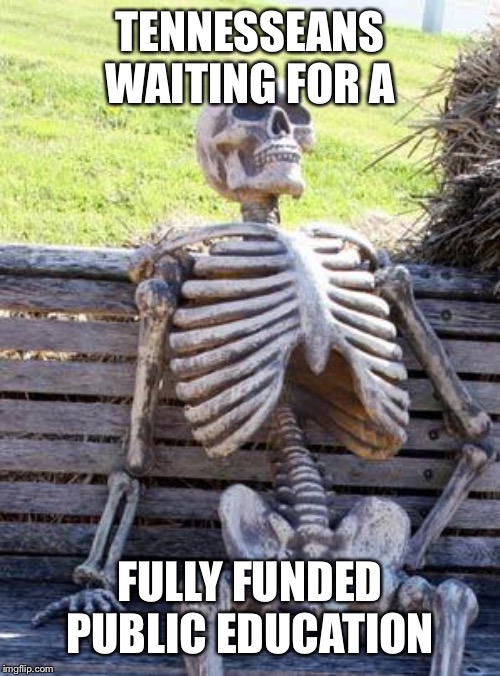
It’s worth noting that if the state fully-funded the BEP 2.0 formula, Sullivan County would stand to gain some $5 million per year. Unfortunately, former Governor Bill Haslam froze BEP 2.0 and current Governor Bill Lee has chosen to fund a voucher scheme rather than invest significantly in public schools.
For more on education politics and policy in Tennessee, follow @TNEdReport
Here are some interesting facts about Wisconsin’s school voucher program. These could be relevant here as Tennessee’s plan is estimated to cost as much as $300 million when fully implemented. Ask yourself: What happens when $300 million is no longer available for the BEP?
2019: 38,862 students at 284 schools statewide receive publicly funded vouchers to attend private schools in 2018-2019. Total cost: $311,470,259.04 (estimated).
Compare to 2018: 35,420 students at 240 school statewide received vouchers in 2017-2018. Total cost of vouchers in 2017-2018: 274,003,172.65 (estimated).
Over 55% of the entire student population of participating schools receive vouchers in 2018.
Only 28% of students receiving vouchers ever attended a public school.
Every year, the enrollment cap is increased by 1% of the local public school district’s enrollment, allowing more students to enter the program. In the 2026 school year, that cap is set in state law to come off entirely.
Students receiving vouchers in 2018-2019 must qualify by income. For the statewide program, that’s 220% of poverty; for the Milwaukee and Racine programs, it’s 300% of poverty. In contrast, students who qualify for Free & Reduced Lunch in public schools must meet at 185% poverty threshold.
Read to be Ready is a statewide reading initiative focused on early grades. The Tennessee Department of Education describes the importance of the initiative this way:
Tennessee has made tremendous gains in student performance over the past several years – except in reading. Despite our educators’ best efforts, reading skills in elementary school learners have failed to improve, and in some cases have even declined. But these abilities are some of the most important ones our students need, and they are foundational to their success.
In discussing the urgency around improving reading results, the DOE says:
We have different vision for the future. We not only want to teach our children to read – we want to develop them into the thinkers, problem-solvers, lifelong learners, and future leaders of Tennessee. And it will take all of us to get there.
All of this sounds great — and reading is certainly very important for all students. Here’s a rubric for a first grade end-of-unit task:
Now, let’s imagine what would happen if first-graders gave honest answers in this brochure. For example, let’s think about the section that “explains the responsibilities of different leaders in Tennessee’s government.”
A first grade student from Franklin might write:
My state representative is Glen Casada. He used to be the Speaker with the big gavel. Then, he resigned because he framed a civil rights activist. He also hired a Chief of Staff who did cocaine on his desk at 10 AM on a Tuesday and had sex in a hot chicken restaurant for about a minute.
Meanwhile, a first-grader from Waynesboro could note:
My state representative is David Byrd. He was a teacher who admitted to inappropriate sexual contact with his students. They let him keep teaching and he even chaired a committee on education policy. People here re-elected him because he goes to the nice church and has the letter “R” after his name. I’ve heard he’s friends with a guy named Casada.
Over in Hohenwald, students in first grade could laud the exploits of state Senator Joey Hensley:
My Senator has been married four times and he got in trouble because he liked a girl who was also his second cousin. He even gave her drugs.
In Cleveland, a first grader might say:
My Congressman is a man named Scott Desjarlais. He’s had many mistresses and even though he says he’s “Pro-Life,” he’s supported abortions for the women he sleeps with.
Anywhere in Tennessee, first-graders could suggest:
Tennessee’s Governor is a man named Bill Lee who fixes air conditioners. He likes to wear plaid shirts a lot and pretend to care about rural Tennessee — like where I live. But, he’s supporting plans to underfund rural schools by sending money to vouchers. He also doesn’t seem to mind that hospitals all across our state are closing.
When discussing all the things Tennessee produces, students might say:
Our state is a national leader. We’re the best in rural hospital closures, we have the highest rate of medical debt, and we have more people working at the minimum wage (like my parents) than anywhere else.
We’re first in a lot of categories like that. We also do a lot to make sure it’s difficult for people to vote.
Oh, and 21 of our counties don’t even have an emergency room — that must be great, to not have any emergencies there.
For more on education politics and policy in Tennessee, follow @TNEdReport
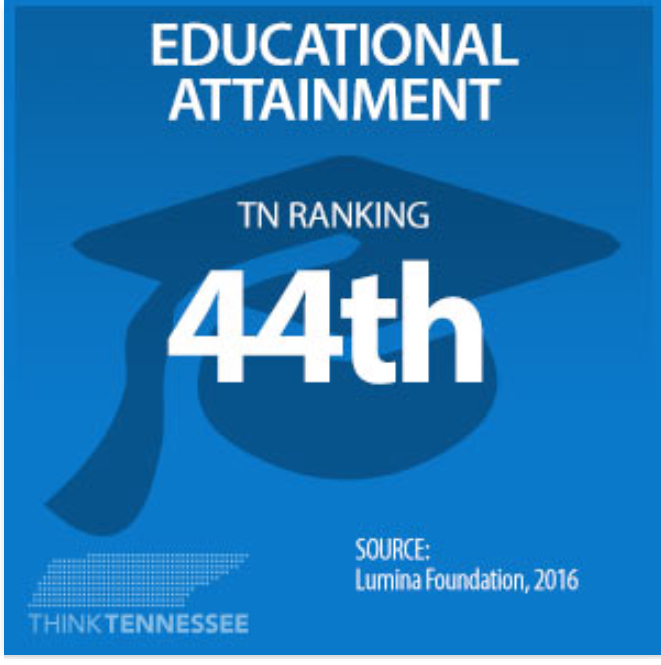
Tennessee is making some lists in the education world, and where we fall is disappointing, if not surprising. While Tennessee is among the states with the lowest investment in public schools, we are also one of the worst states to be a teacher. Here’s more from HeyTutor and Business Insider:
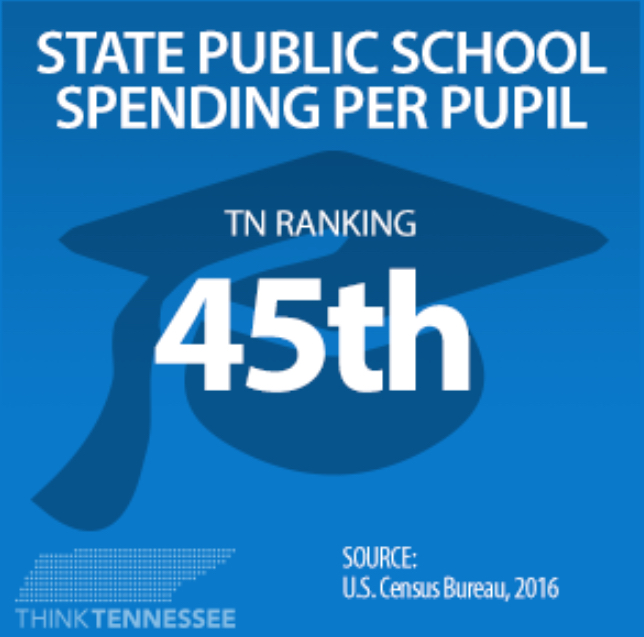
Tennessee is near the bottom in investment in public schools, according to data published here:
Tennessee
Total spending per student: $9,184
Instructional spending per student: $5,584
Support services spending per student: $3,090
Total spending: $9.27 billion
Average teacher salary: $48,456
Graduation rate: 89.8%
Academic performance: Below average
Tennessee is also one of the worst places in the country to be a teacher, according to Business Insider:
Tennessee: One-third of teachers in the state would leave the profession for something with higher pay, a 2019 survey found.
And, here’s a friendly reminder:
For more on education politics and policy in Tennessee, follow @TNEdReport
Your support helps make publishing education news possible.
A recently released study on student achievement confirms what any teacher will tell you: Poverty matters. In fact, it matters a great deal. It seems the only people who don’t realize this are those making education policy — and Tennessee’s policy makers are among the worst at denying the reality of the situation.
Here’s more from the Washington Post:
High concentrations of poverty, not racial segregation, entirely account for the racial achievement gap in U.S. schools, a new study finds.
The research, released Monday, looked at the achievement gap between white students, who tend to have higher scores, and black and Hispanic students, who tend to have lower scores. Researchers with Stanford University wanted to know whether those gaps are driven by widespread segregation in schools or something else.
They found that the gaps were “completely accounted for” by poverty, with students in high-poverty schools performing worse than those from schools with children from wealthier families.
This isn’t actually news — but it is interesting to have such a comprehensive academic study confirming the importance of addressing poverty as a key driver of improving education outcomes.
I’ve written about this on a Tennessee-specific level before, especially as it relates to state testing and the ACT:
An analysis of TCAP performance over time indicates that those school systems with consistently high levels of poverty tend to have consistently low scores on TCAP. Likewise, those systems with the least amount of poverty tend to have consistently higher scores on TCAP.
One possible explanation for the expanding achievement gap is the investment gap among districts. That is, those districts with lower levels of poverty (the ones scoring higher on TCAP) also tend to invest funds in their schools well above what the state funding formula (BEP) generates. The top ten districts on TCAP performance spend 20% or more above what the BEP formula generates. By contrast, the bottom 10 districts spend 5% or less above the formula dollars.
In other words, money matters. Districts with concentrated poverty face two challenges: Students with significant economic needs AND the inability of the district to generate the revenue necessary to adequately invest in schools.
The Achievement School District’s first Superintendent, Chris Barbic, referenced this challenge as he was leaving the job:
As part of his announcement, he had this to say about turning around high-poverty, district schools:
In his email early Friday, Barbic offered a dim prognosis on that pioneering approach. “As a charter school founder, I did my fair share of chest pounding over great results,” he wrote. “I’ve learned that getting these same results in a zoned neighborhood school environment is much harder.”
While state policymakers adopt misguided “reforms” like A-F school report cards and expensive voucher schemes, children in poverty remain in poverty. Interestingly, the State Report Card holds schools accountable for closing achievement gaps:
Under Tennessee’s accountability system, districts must increase achievement levels for all students and show faster growth in achievement for the students who are furthest behind in order to narrow achievement gaps.
At best, this policy is well-intentioned but misguided. A more cynical look at the policy reality would conclude that legislators simply don’t want to admit the real problem because dealing with it would be politically difficult.
Addressing poverty would mean providing access to jobs that pay a living wage as well as ensuring every Tennessean had access to health care. Our state leads the nation in number of people working at the minimum wage. We lead the nation in medical debt. We continue to refuse Medicaid expansion and most of our elected leaders at the federal level are resisting the push for Medicare for All.
Governor Bill Lee’s idea is to provide vouchers. Of course, all the evidence indicates vouchers just don’t work — they don’t improve student achievement. They do, however, take money from the public schools.
Bill Lee and his legislative allies are the latest to stick their heads in the sand and ignore the plight of the least among us. All the while, these same leaders expect teachers and school districts to do more with nothing.
Sadly, ignoring the problem won’t make it go away. Instead, like yet another disappointing UT football season, it will just keep getting worse.
For more on education politics and policy in Tennessee, follow @TNEdReport
Your support — $5 or more — makes publishing education news possible.
While Tennessee’s two largest school districts (Nashville and Memphis) are suing the state arguing the BEP funding formula is not adequate, new concerns are being raised about the equity of current funding. Three previous lawsuits (the “Small Schools” suits) challenged the state funding formula and each time, the Tennessee Supreme Court directed the state to take action to improve funding and make it more equitable for rural districts.
Despite these changes, it seems familiar concerns are being raised about funding distribution to rural districts. Chalkbeat has more:
But a new report says rural schools also face significant challenges in providing an equitable education to a third of the state’s students, all while serving a growing Latino population drawn to those areas mostly by agricultural work.
High poverty rates, lower median household income, opioid addiction, and limited access to technology and healthcare are among the issues in rural Tennessee, where fewer people are likely to attend college and more are likely to receive food stamps than their urban counterparts, according to economic research.
And with less industry and lower local tax bases to support their schools, rural districts also struggle to recruit, support, and retain effective educators.
Governor Bill Lee inherited this problem, and so far has done nothing to help it. Instead, his push for vouchers could end up hurting rural school systems by taking as much as $300 million out of the state funding formula for public schools.
Additionally, for years, the BEP formula has been broken, failing to deliver needed funds to districts at even a basic level. Now, the state’s Comptroller suggests Tennessee would need at least $500 million a year in new investments to properly fund schools.
So far, there has been zero indication Lee has any desire or inclination to address the funding shortfall that disproportionately impacts the state’s rural schools. Sure, he dresses up like a farmer every weekend and records neat videos, but that’s not doing anything to put dollars into the schools that need them most.
For more on education politics and policy in Tennessee, follow @TNEdReport
Your support makes publishing education news possible.
As the Sumner County Commission prepares to vote tonight on setting a tax rate that would in part fund a $4000 raise for every teacher in the county, local educator Kyle Craighead explains the importance of taking this step.
My name is Kyle Craighead, and I have lived in Sumner County my entire life except for the four years I attended Lipscomb University. I am a proud graduate of Hendersonville High School and am thankful for the education I received at Lakeside Park, Hawkins, and HHS. I began teaching science at Merrol Hyde Magnet School in 2008, where I also at various points coached basketball, tennis, and served as the athletic director and as a teacher leader. From 2016-2018 I taught biology and served as a teacher leader at Gallatin High School. I am currently in my 2nd year as an assistant principal at White House High school and am in my 12th year overall in education. My wife, brother, and several cousins are educators in Sumner County. Education is a calling, and my family is 100% devoted to doing what is right by our students in Sumner County.
You will likely hear many facts and figures tonight, and I have a few of my own, but I want to first tell a story. This summer in June we were interviewing for an open teaching position, and at the end of the interview we asked the prospective teacher if he had any questions for us. He then asked, “Well I don’t know how to ask this without sounding selfish, but I looked up the pay scale in Sumner County, and it looks like to me that I would take almost a 1200 dollar pay cut if I moved over here. I know that can’t be correct, so can you explain this to me?”
How do you answer that question? Sumner is the 9th wealthiest county in TN out of 95 counties. Robertson is 21st . I’m not talking about Williamson. I’m not talking about Davidson or Rutherford. Robertson is across the street from White House Middle School…literally. White House Heritage is less than 1 mile from White House High School. Let that sink in a minute. This is not a distant competitor.
When finding prospective teachers, we pride ourselves on selling a strong student and faculty culture as well as a supportive community, and it works. Everyone wants to work where they are respected and have growth opportunities. We have accomplished this in Sumner County Schools. But as the Sumner County Community as a whole, how can a brand new teacher looking for a job out of college think that they are supported when Robertson, Davidson, Wilson, Trousdale, and Macon counties all pay first year teachers more? How many teachers overlook Sumner immediately? How many drop out of interview pools when they figure out the pay scale? How many of our top level Sumner County graduates are going to decide to teach in a different county? When you’re talking about a salary of 35,000 dollars, every bit counts.
I want to say this to all parents of Sumner County students: you, like us, want the best education for your child. There are endless studies on the biggest influence on a student’s learning, and every one of them point to the classroom teacher as the most important factor. I am a parent of a future student in our county, and I don’t just merely want good teachers. I expect it. I demand it, just like all of the rest of the parents out there.
In summary, I hope you all see that I am not clamoring for ridiculous teacher pay increases. I’m not even arguing that teachers work way more and are far more devoted that anyone outside of education understands, because although those are very true and valid points, I’m making a simpler point and it is incredibly easy to understand: Robertson, Trousdale, and Macon have a combined total of 95,000 residents. Sumner has over 160,000. Sumner routinely outperforms those other 3 counties on every measurable piece of student achievement and growth, and that’s because we have amazing teachers.
In terms of wealth, Sumner is 9th, Robertson is 21st, Trousdale is 40th, and Macon is 85th.Based on that evidence, how can Sumner continue to pay the least and expect to have the best teachers in the future?
For more on education politics and policy in Tennessee, follow @TNEdReport
Your support – $5 or more today — helps make publishing education news possible.
In the wake of Governor Bill Lee’s voucher legislation that is poised to cost hundreds of millions of dollars and drain resources from public schools, the Fayetteville City School Board passed a resolution calling on the General Assembly to make a commitment to funding teacher salaries.
The Fayetteville City School Board has adopted a resolution urging legislators to increase public school teachers’ pay by the same amount invested in Education Savings Accounts established through legislation passed by the General Assembly this past session.
The Board is asking school districts across the state to join in the effort. The resolution notes that current BEP funding for schools does not adequately fund teacher pay.
“ … Local school boards recognize that funding for teacher salaries under the Basic Education Program (BEP) under current law is insufficient,” the resolution continues. “ … Districts are funded based on a district-wide student-teacher ratio, rather than the actual number a district is required to employ to meet school-level ratio requirements … The teacher salary used for BEP funding does not represent the actual average teacher salary statewide.
While vouchers certainly impact school funding, it’s also worth noting here that Governor Lee made a significant investment in charter schools this year as well, doubling funds for charter facilities while offering teachers only a 2.5% increase in BEP salary funds.
Estimates indicate that funding the BEP salary component — funds given to districts for teacher pay — at an amount approaching the actual cost of hiring a teacher would mean spending in the range of $300-$500 million.
It’s not clear if Governor Lee or anyone in the legislature has a desire to actually improve teacher pay at a level that will make a real difference. Or, if anyone there even plans on undoing Governor Haslam’s mistake of freezing BEP 2.0.
It will be interesting to see how lawmakers respond if additional districts join Fayetteville in pushing for adequate pay for teachers. Will the same lawmakers who were so focused on ensuring vouchers didn’t “hurt” their districts also support providing their districts with the needed funds to compensate teachers?
For more on education politics and policy in Tennessee, follow @TNEdReport
Governor Bill Lee has been on a tour of rural Tennessee counties the last two weeks. During his stops, he’s touting what he’s calling a successful first legislative session. If by success, he means securing passage of a school voucher scheme by any means necessary, sure, he’s been successful. Maybe he means siphoning public money to private schools by way of his Education Savings Account (ESA) plan to the tune of as much as $300 million? Or, perhaps he means demonstrating how he really feels about public school teachers by including the lowest increase in BEP salary funds in the last four budget cycles in his budget — all offering new money and easier access to charter schools.
What Bill Lee hasn’t done on these stops is tell the real story. Because it’s embarrassing. No one likes to talk about it. It’s Bill Lee’s ED. His Education Deficit. Since Bill Lee won’t admit it, I took the liberty of compiling some data to help him talk about it.
Here’s a look at each of the seven counties Lee visited in the past two weeks on his ED tour. I’ve noted first the average salary increase teachers in those counties received since 2015. Next, I’ve indicated the “BEP Gap” — that is, the number of positions each county pays for above what the state funding formula generates. Here’s what this means: The school system NEEDS those employees in order to provide a quality education. But, the state formula won’t pay for them. So, local taxpayers are left footing 100% of the cost of those positions. Data provided by the Comptroller of the Treasury and the Department of Education.
County Avg. salary increase BEP Gap
Bledsoe 3.4% 13
Meigs 1.5% 20
Loudon 1.4% 46
Giles 0.925% 81
Lawrence 1.9% 94
Lincoln 1.8% 49
Bedford 2.25% 24
As you can see, we’ve got some work to do. Teachers in these rural counties have salaries that lag below the state average and receive relatively low annual salary increases. Plus, taxpayers in these communities are left footing the bill for a BEP that simply isn’t adequate to meet the needs of our schools in 2019. Bill Lee did nothing to address the structural deficits in the BEP. Plus, he offered teachers the lowest state funds for raises in the last four budget cycles.
While Lee likes to ride around on a horse to tout his vitality, it’s clear there’s an ED problem he just doesn’t want to talk about.
For more on education politics and policy in Tennessee, follow @TNEdReport
Your support makes reporting education news possible – just $3 or more today makes a difference.
This story about retailers attempting to be “good citizens” by offering discounts to teachers actually highlights two larger problems: We don’t adequately fund our schools AND we don’t pay teachers what they deserve.
We already know there’s a significant teacher pay gap across the country. That gap is particularly troubling in Tennessee — a state with a teacher pay gap above the national average. In fact, Tennessee has one of the worst teacher pay gaps in the Southeast. Teachers in Tennessee earn 27.3% less than their similarly-educated peers. Not only that, teacher pay in Tennessee is growing at a rate well below the national average:
Average teacher salaries in the United States improved by about 4% from the Haslam Promise until this year. Average teacher salaries in Tennessee improved by just under 2% over the same time period. So, since Bill Haslam promised teachers we’d be the fastest improving in teacher pay, we’ve actually been improving at a rate that’s half the national average. No, we’re not the slowest improving state in teacher pay, but we’re also not even improving at the average rate.
Then, there’s the issue of basic supplies for learning. Here’s the promotion that got the attention of the writer:
Target wants to help teachers stretch their back-to-school dollars on more than just supplies for their classrooms.
For the second year, the Minneapolis-based retailer will offer teachers a weeklong 15% discount on select items starting July 13, officials shared exclusively with USA TODAY Wednesday…
This year, in addition to school supplies and essentials, which include disinfecting wipes and food storage bags, adult clothing and accessories, Pillowfort furniture and Bullseye’s Playground items also are included.
Here’s the bottom line: School systems should just buy the damn supplies. School administrators should find out what teachers need — the basics, yes, paper, pencils, etc. And also find out what else is needed to run an excellent classroom at all levels and then forward that request to the school system.
Lots of these items could be found at reasonable prices due to bulk purchasing discounts. Moreover, it’s important to have a clear understanding of what it takes to run a classroom and a school.
Not once in the 20+ years that I’ve worked professionally have I been asked to purchase and bring in the supplies I need to do my job. But we ask that of teachers ALL THE TIME.
Stop it. As the writer says:
Stores that have “back to school” sales so parents can buy all those necessary supplies that (usually elementary) teachers post on their classrooms doors or windows? Nope. If public education is a public good, then the schools should provide the necessary supplies.
Is public education a public good in Tennessee? Our Constitution says so:
Article XI, Section 12 of the Tennessee Constitution says, “The General Assembly shall provide for the maintenance, support and eligibility standards of a system of free public schools.”
That obligation was reinforced in the 1993 Tennessee Supreme Court decision in Small Schools v. McWherter:
“The constitution imposes upon the General Assembly the obligation to maintain and support a system of free public schools that affords substantially equal educational opportunities to all students.”
Simply put, Governor Lee and the General Assembly are not living up to this obligation. According to the Comptroller of the Treasury, we under-fund schools by at least $500 million.
We routinely ask underpaid teachers to fill in the gaps when it comes to supplies. And we applaud the businesses who offer discount promotions to teachers or back-to-school sales as if they are actually doing something. If they wanted real change, those business leaders would be at school board and county commission meetings asking for the needed revenue to fund schools adequately. Then, they’d go to the General Assembly — to the very politicians their businesses bankroll – and pursue policy change that resulted in excellent teacher pay and fully-funded schools.
Too often, though, those same businesses beg the state for tax incentives — enriching themselves at public expense while true public goods like education suffer.
Our state needs leaders who will call this out — leaders not beholden to the private entities who want your tax dollars to boost their profits. Our public schools are a priority in our state Constitution. They should be a priority for our political leaders as well.
For more on education politics and policy in Tennessee, follow @TNEdReport
Your investment of $3, $5, or $7 makes reporting education news possible.