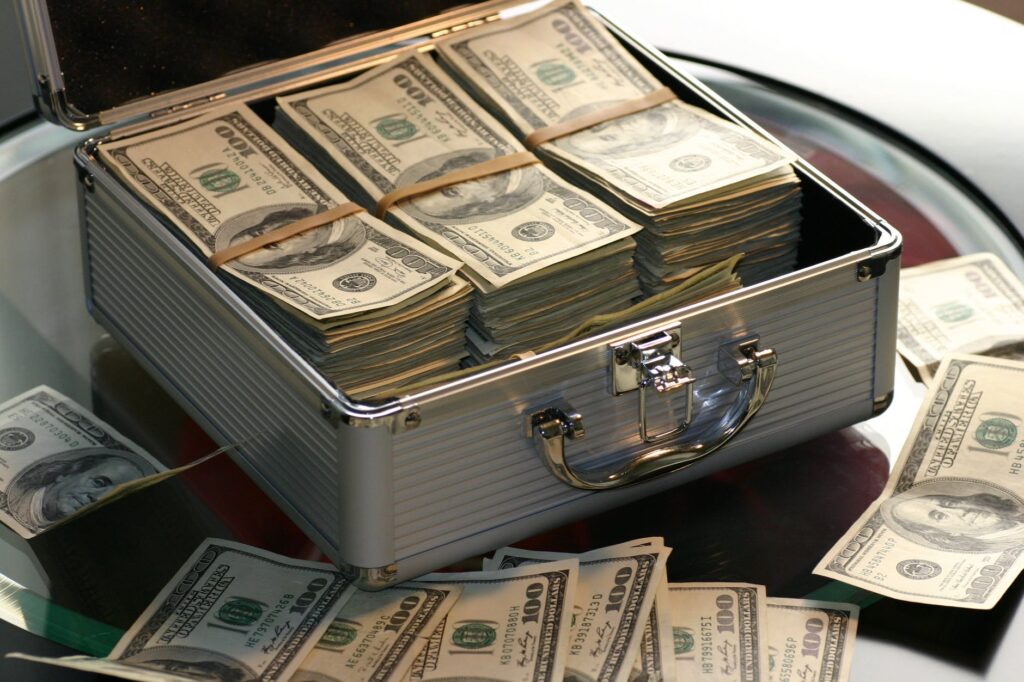
That’s how Tennessee Education Association (TEA) President Beth Brown described the state of education funding in Tennessee.
The Chattanooga Times-Free Pressreports on Brown’s remarks, which come just as Gov. Bill Lee prepares to deliver his State of the State address tonight.
Brown notes:
“Our funding is so low the only neighboring state we beat is Mississippi,” wrote Brown, a Grundy County teacher. “To meet Kentucky’s per student investment, the state would need $2.6 billion; to match Arkansas, the increase would be $860 million; and to be on par with Alabama would require $560 million this year alone.”
Brown’s criticism of the state’s poor track record of investment is noteworthy as the state now sits on a $3.1 billion surplus due to better than expected revenue flow during the COVID-19 pandemic.
While Brown says the state can do more, the Tennessee House Republican Caucus is bragging about what are rather dismal numbers over the past 10 years.
Last year, Lee proposed a 4% increase the BEP allocation for teacher pay, but then cancelled that planned raise when the pandemic hit.
Even the state’s own bipartisan group of policymakers assigned to the task of assessing government policy as it impacts state and local issues suggests we need big, new investment in schools in order to adequately fund the BEP:
Still, I’ve yet to hear anyone in the state’s legislative leadership call for bold, new investments in public schools. Yes, a bipartisan group of policymakers has suggested that our school funding formula – the BEP – needs $1.7 billion just to be adequate. Still, Gov. Bill Lee has not come out and mentioned that he’ll be proposing using these surplus dollars to fund schools.
Tune-in tonight and see whether Lee makes any attempt at meeting this challenge.
For more on education politics and policy in Tennessee, follow @TNEdReport
Your support – $5 or more – makes publishing education news possible.
I mean, really? The Tennessee House Republican Caucus sent out a tweet today bragging about the amount of money the state has invested in teacher pay over the past decade.
Here it is:
Republicans have passed $616.5 million in teacher pay increases since 2011 with more on the way! We support and appreciate our teachers as foundation builders for our state!
I’m not even sure where to start. Well, actually, I am.
$616.5 million sounds great, and it’s neat to aggregate data over a decade, but that BIG number averages out to about $62 million per year. That’s about a 2% increase in the BEP salary allocation (not actual money in paychecks) each year. Calm down a little, already.
Did I mention that $616.5 million might sound great? So, the TN House GOP is all excited about spending $616 million plus over TEN years, while the state is sitting on a $3.1 billion surplus this year alone! That means we could spend $616 million in teacher salaries THIS YEAR and still have more than $2.4 billion LEFT to spend. Read that again. Republicans are bragging about taking an entire decade to allocate in total what is available THIS year and could be funded while still leaving $2.4 billion for other priorities.
A bipartisan group of policymakers reports that we need $1.7 billionin a SINGLE year in order to adequately fund the BEP. That’s because the BEP badly underestimates the number of teachers actually needed to staff schools. Of course, the BEP also fails to take into account proper ratios for school nurses or school counselors. The BEP is pretty much broken, and has been for some time.
It was Republican Gov. Bill Haslam who stopped the BEP 2.0 formula that was an attempt to correct and improve the BEP allocation.
Remember that time when Gov. Haslam got all excited about our NAEP scores and promised a big raise to teachers and then cancelled the raise? Remember how after he cancelled the raise, revenue numbers came in at a level that meant the raise really could have been funded? Good times.
Oh, yeah. School districts fund significantly more teachers than the BEP allocates. Yes, this has been a known problem for some time. Yes, the GOP has been running most of state government for over a decade. No, they haven’t done anything to fix it.
There was also that time when the Haslam Department of Education called on the State Board of Education to give local districts flexibility with BEP salary money. Essentially, this created a situation where the 4% BEP salary allocation increase became a 2% (or less) raise.
Remember the time when Gov. Bill Lee gave a big increase in state funding to charter schools and a tiny raise to teachers? Wonder if teachers remember that? I bet that makes them feel really appreciated.
Remember the year when Gov. Lee became the second governor in a row named Bill to promise teachers a big raise and then cancel it when things got tough? Because, yeah, that was 2020. How’d that tough budget Lee was worried about turn out? Oh, right, that’s the one with the $3.1 billion surplus.
Finally, in the recently concluded special session, Gov. Lee proposed and his legislative leadership secured passage of legislation giving teachers a 10 cents on the dollar COVID raise. That’s right, in a year when there’s plenty of cash and teachers are working more and harder than ever, Gov. Lee is placing the value of teachers at 10 cents on the dollar.
Oh, and yes, Tennessee consistently receives a grade of “F” in both school funding and school funding effort from national groups who analyze state level investment in schools.
So, try again TN House GOP tweeter. Maybe next time, do some math and take a look at the archives.
For more on education politics and policy in Tennessee, follow @TNEdReport
Your support – $5 or more – makes publishing education news possible.
It’s raining money in Tennessee as recently-released projections suggest state policymakers could have as much as $3.1 billion EXTRA to allocate when they return for the regular legislative session next week.
This is, of course, a very good position. However, it’s not at all clear the state will allocate those resources into meaningful investments that improve the quality of life in Tennessee.
Take the action on teacher compensation during the special session as an example. Despite early reports that revenue would be higher than anticipated, Gov. Bill Lee’s teacher pay adjustment amounted to roughly 10 cents on the dollar compared to the extra work teachers have been doing during the pandemic. There was little meaningful investment in public schools at all, really.
In case you’re curious about how we got to a place where we have $3.1 billion extra to spend, the Sycamore Institute breaks it down.
In late March 2020, consumer spending in Tennessee dropped 27% below January levels – compared to 32% nationally. Soon after, the state received billions in federal aid designed to provide economic relief to citizens, businesses, and health care providers. After federal stimulus payments and enhanced unemployment benefits began in mid-April, Tennessee’s consumer spending rebounded close to pre-pandemic levels, while spending nationwide remained down by about 16%. (1) (2) Meanwhile, prior changes to state law took effect in July 2020 that led the state to collect sales tax on more internet purchases.
Here’s the breakdown of the extra cash:
Compared to the current budget, the governor and state lawmakers may have about $3.1 billion in additional General Fund revenue† to allocate this session (Figure 3). Based on the upper end of the annual Funding Board ranges, this includes:
$476 million (non-recurring) from the FY 2020 surplus (8)
$1.1 billion (non-recurring) from projected FY 2021 collections above official budgeted estimates (4)
$1.5 billion (recurring) from the increased FY 2021 base plus projected FY 2022 growth (4)
It’s worth noting here that TACIR – a bipartisan group of policymakers that studies and reports on government activity in the state – reports that Tennessee needs $1.7 billion to adequately fund the BEP.
So, good news! We can afford to make a significant investment that closes this funding gap. I look forward to Gov. Bill Lee’s State of the State next week where he announces that based on these new numbers, he’s making a record-setting investment in public schools and plans to do so throughout the remainder of his term.
But, who am I kidding? Gov. Lee isn’t going to do that. Heck, Lt. Gov. McNally has already talked about finding new ways to offer more tax cuts rather than making new investments.
Tennessee has tried a lot of experiments when it comes to our public schools. One thing we haven’t tried, though, is really investing in them.
The land of make believe is apparently where Gov. Bill Lee and his team go to find justification for their bad public policy. WMC-TV out of Memphis has the story about how the Lee Administration is using old data from a study based on projections to justify a demand that schools return to in-person learning.
Here’s more:
Despite new data suggesting COVID-19 learning loss wasn’t as severe as predicted, state leaders continue to use old data, which some have called misleading, to pressure school districts like Shelby County Schools to reopen for in-person classes.
The ACTUAL data from students suggests any “loss” of ground due to the pandemic is relatively minimal. Lending credence to claims made by Nashville blogger TC Weber and others that the entire concept of “learning loss” is pretty much ridiculous.
For example:
Shelby County Schools also released its own data in November, showing that while learning loss did occur in reading and math, it wasn’t as bad as predicted.
For instance, 28% of students placed below grade level in reading compared to 27% historically.
In math, 29% of students placed below grade level compared to 23% historically.
Despite the newer data, the governor and his administration continue to use projections from the April NWEA study to pressure school districts like SCS to reopen to in-person classes.
Calling out hypocrisy
Shelby County Schools Superintendent Joris Ray noted that while calling for students to return to in-person learning, Commissioner of Education Penny Schwinn appeared via video to legislators:
“Watching state leaders call for in-person learning on the state legislature’s virtual video meeting today sends a mixed and hypocritical message. We invite state leaders to step away from privileged podiums and try to understand the many concerns of our students, parents, and teachers,” Ray said.
Whether it is Bill Haslam’s Commissioner of Education telling tales about TNReady or Bill Lee’s Commissioner appearing virtually using make believe data to push for in-person learning, Tennessee’s recent history indicates education policy is made independent of actual facts.
For more on education politics and policy in Tennessee, follow @TNEdReport
Your support – $5 or more – makes publishing education news possible.
So, the General Assembly has passed a bill essentially creating mandatory retention for third grade students who fail to meet certain benchmarks on TNReady tests.
Here’s the key text from HB 7004, that passed overwhelmingly in both chambers:
(1) Beginning with the 2022-2023 school year, a student in the third grade shall not be promoted to the next grade level unless the student is determined to be proficient in English language arts (ELA) based on the student’s achieving a performance level rating of “on track” or “mastered” on the ELA portion of the student’s most recent Tennessee comprehensive assessment program (TCAP) test.
The bill outlines a series of potential ways a student may ultimately be promoted even if they fall into this category. Attending a summer “mini-camp,” for example.
But, as Senator Jeff Yarbro points out, 62% of third graders currently fall into the category where retention is the default action. And, students who are retained at this age end up more likely to not complete school or graduate from high school. There’s definitely mixed data on the benefits and drawbacks to retention.

There’s a lot to read in that article by Paul Thomas, but here are some key points regarding third grade retention:
But Mississippi has taken the concept further than others, with a retention rate higher than any other state. In 2018–19, according to state department of education reports, 8 percent of all Mississippi K–3 students were held back (up from 6.6 percent the prior year). This implies that over the four grades, as many as 32 percent of all Mississippi students are held back; a more reasonable estimate is closer to 20 to 25 percent, allowing for some to be held back twice. (Mississippi’s Department of Education does not report how many students are retained more than once.)
Thomas adds:
This last concern means that significant numbers of students in states with 3rd-grade retention based on reading achievement and test scores are biologically 5th-graders being held to 4th-grade proficiency levels. Grade retention is not only correlated with many negative outcomes (dropping out, for example), but also likely associated with “false positives” on testing; as well, most states seeing bumps in 4th-grade test scores also show that those gains disappear by middle and high school.
So, we’ve adopted as the official policy of the state of Tennessee a policy that Mississippi used to create a mirage of educational improvement while changing precious little in terms of actual investment in kids.
It seems Tennessee policymakers are once again looking for some sort of “fastest improving” press release instead of looking for meaningful policy change.
Oh, and here’s another interesting note. The test being used to determine retention is the TNReady test. Yes, that one. Yes, THAT one.
While the tests were ultimately suspended last year due to the COVID-19 pandemic and are currently envisioned as being delivered on pencil-and-paper, the goal is to return to online testing. However, that return is fraught with potential problems. Not least of which is the fact that our state has had some . . . uh, trouble, with administering an online test.
Here’s how one national expert described Tennessee’s experience with online testing:
“I’m not aware of a state that has had a more troubled transition” to online testing, said Douglas A. Levin of the consulting group EdTech Strategies.
Of course, those third graders also need to watch out for hackers and dump trucks, because we all know those two things can really foul up a test!
Here’s Sen. Yarbro explaining the problems with this bill:
"We are creating a high stakes test for 8-year-olds."
"We are extending a 6 week period for every district & we are not sending anywhere near the resources to pay for it."
If school districts don’t do what House Majority Leader William Lamberth wants, he’s going to take their money and run. Seriously. It’s actually pretty much the text of HB7021.
As introduced, the bill says that if districts fail to provide at least 70 days of in-person instruction for students in grades K-8 in the 2020-21 academic year and 180 days in the 2021-22 academic year, the Commissioner of Education may withhold all or a part of that district’s BEP funds.
I mean, I wrote a few days ago about carrots and sticks, but this is taking it a bit far.
It’s not clear to me what Lamberth hopes to accomplish by this other than forcing districts to make a decision to return to in-person learning at a time when COVID is still surging in our state.
Here’s the deal: Districts can’t take the risk they’d lose any BEP money. In fact, the BEP is inadequate (by $1.7 billion) as it is. So, it’s not like there’s tons of extra cash sitting around and districts can just ignore this ridiculous request.
While most people agree that in-person learning is the best possible climate for students, especially in grades K-8, not dying or carrying COVID home to parents is also a worthy outcome.
The bill appears designed to force districts like Memphis and Nashville, both of which have been and are still completely virtual in all grades, to return to in-person learning. In other words, Lamberth wants to overturn the will of the district leaders and school boards in these two cities (and others that have made similar moves).
It’s interesting that this bill comes even as Gov. Lee revealed his not so special legislative session legislative package last week. That package of bills includes a number of unfunded mandates. So, Lamberth is going to take money from districts that put student safety first and Lee is going to hit those same districts with a host of unfunded mandates. Makes tons of sense!
For more on education politics and policy in Tennessee, follow @TNEdReport
Your support – $5 or more – makes publishing education news possible.
Nashville education blogger TC Weber calls bullshit on the latest term meant to provide full employment for the edu-elite. In a post examining legislation Gov. Bill Lee wants in the upcoming special session on education, Weber lays bare the truth behind the bogus term and further exposes the dark side of the bills being considered.
Here’s how TC explains the issue:
The term “Learning Loss” is a made-up term, created primarily to retain and obtain funding.
We have no assessment that measures this hypothetical phenomenon. It is a tool utilized to prey upon the fears of parents as their children navigate unprecedented times and to make sure that companies who provide so-called student supports don’t lose money.
Kids may be learning at a slower pace, or they may be learning things differently than what current assessments measure, but they are still acquiring important knowledge and previously acquired skills are not fleeing their brains.
First of all, there is no data, historical or current, that can accurately support the supposition of a learning loss percentage. NWEA markets the MAP test, which does a fantastic job of measuring growth and proficiency. Both are very different than “learning loss”.
Research supports the idea that as we regularly use a skill it stays at the forefront of our brain, readily called upon. If we don’t regularly engage the skill it recedes to a storage shelf in the back in order to clear space for new skills. After a couple of months or longer, of sitting on the shelf, the ability to instantly recall fades. But the skill is not lost, and depending on the length of time between usages, can be readily recalled with some refreshers. However long it takes, is shorter than the initial learning period.
Think of it this way. Back in high school you probably read the Great Gatsby. You probably reflected on it for a bit after completion, but eventually, you put it on the shelf and made room in your brain for other books. If I gave you a test today on the book’s content, you probably would not fair very well. But if I showed you a few passages, and some reviews, before testing, you’d in all likelihood fare much better. Might even say things like, “Not sure how I remember this but…”The information wasn’t lost, it was merely shelved for future recall.
Gov. Bill Lee’s “Not So Special Session” on education starts tomorrow at the Tennessee General Assembly. Former Nashville School Board member Amy Frogge offers some insight into what to expect this week.
Here are her thoughts:
The Governor has called a special legislative session this week to address three administration bills. Heads up to educators, parents and friends- we need your help to reach out to legislators who will be voting on these bills!
1. Senate Bill 7001: This testing waiver/hold harmless bill would require school districts to test 80% of students in-person (with pen and paper) in exchange for exemption from the A-F district grading system, placing districts into the Achievement School District, and placing schools on the state priority list (bottom 5%). This bill would require districts to return to in-person instruction. It is unclear how this bill will effect teacher evaluations. The question to ask here is why we are even testing at all this year, during a pandemic and so much chaos. (Hint: follow the money.)
2. Senate Bill 7002 addresses “learning loss” during the pandemic. (This, by the way, is a political- not an education- term.) It would require districts to create in-person, summer mini-camps to help children who are struggling this year. While these camps could be helpful to students, the state is creating another unfunded mandate, because only $67 million will be allotted statewide for the initiative, not nearly enough for implementation. The administration also envisions paying for the camps with stockpiled Temporary Assistance for Needy Families funds, which is likely illegal. BUT here’s the biggest concern about the “learning loss” bill: It will require districts to hold back third graders who are not deemed “proficient” in standardized testing. (Proficiency rates can be manipulated by the state through cut scores.) If you google the term “Mississippi miracle,” you will find that Mississippi used this very same trick to create the appearance of a sudden increase on NAEP test scores. Holding back low-performing third graders creates the illusion of huge one-time testing gains, and implementation of the bill would take place just in time for the 2023 NAEP tests. This is not about best serving the children of Tennessee; it’s about gaming the system. Furthermore, the costs for holding back large numbers of third graders, as mandated by this bill, would be astronomical.
3. Senate Bill 7003 would implement a phonics-based literacy program that proponents claim helped Mississippi’s test scores. In reality, holding back low-performing students caused the increase in scores, as I’ve explained above. Aside from the ruse to game NAEP scores, this bill is problematic, just like the “science of reading” literacy bill that Commissioner Schwinn pushed last year. It opens the door to more school privatization. Schwinn, a graduate of the Broad Academy, has been pushing preferred vendors and no-bid contracts (just like our former superintendent). Reducing the complex art of teaching reading to a marketable, scripted phonics curriculum allows school districts to hire cheaper, inexperienced teachers and allows for vendors to make a lot of money by control the curriculum. District should be embracing balanced literacy instead, of which phonics is just one component.
While Tennessee continues to push the narrative that schools and teachers are “failing” in order to open the door to more and more private profit, we should be instead investing in our students, schools and teachers. The state has long failed to properly fund Tennessee’s schools. This year, there is a surplus of $369 million in our rainy day fund, and the state is about to put another $250 million into that fund. We have more than enough to pay our teachers reasonable salaries and to truly address student needs through more social workers, school nurses, guidance counselors and wrap-around services.
The Governor is also expected to announce a 2% statewide teacher raise tomorrow, but beware of the spin on this promise as well. Already, the state is shorting school districts by not paying enough through BEP funds to fully cover teacher salaries. The BEP funds approximately 66,000 teachers, but according to the state’s own report, there are approximately 77,000 teachers in Tennessee. Local districts must make up for this funding shortfall. The 2%, $43 million teacher raise will only be allotted for 66,000 teachers- not all of the teachers in Tennessee, and it will be paid for through non-recurring funds, which means that local districts will cover the difference in future years. Finally, this raise amounts to $10 per week per teacher- 10 cents on the dollar– an insult to teachers. Please reach out to your representatives to share your concerns about these bills. We should particularly focus on those legislators listed in the comments below who are serving on the education committees. Although this is a quick special session, legislators are not expected to vote on these bills right away due to the MLK holiday today. You have time!
That’s what Gov. Bill Lee is proposing for teachers in his COVID-19 package for education. This is just the latest in what has become a pattern of showing blatant disrespect for educators in his budget proposals.
“Tennessee’s educators have worked hundreds of additional hours during the fall semester to maintain instruction and keep our students engaged during this pandemic,” said TEA President Beth Brown. “The proposed $43 million in one-time teacher salary funds is far lower than what the state can afford, and far less than what educators have earned and deserve.”
TEA estimates the average educator worked more than 13 additional hours per week this fall to maintain daily instruction—virtually, in-person, or a hybrid—with a large portion of Tennessee’s educators working 20 or more additional hours. The value of the additional instruction work was approximately $5,700 per educator. The administration proposal comes to approximately $570.
The General Assembly eliminated a $117 million 4% educator raise in June, citing falling revenue due to the pandemic. Since then, the state recorded $369 million in surplus to end the last fiscal year and has collected $715 million surplus revenue in just the first five months of this fiscal year.
“In the upcoming special session, the administration and General Assembly have an important opportunity to recognize the sacrifices made for our students and to take steps toward making educators whole for the unpaid hours we’ve worked,” Brown said. “What has been initially proposed does not do that. Appropriating $200 million — just a fifth of the surplus revenue collected since June – would be more appropriate and still be affordable. A more significant investment will go a long way in recognizing the extraordinary effort of our state’s educators.”
The Education Law Center recently published its annual analysis of school funding in the states. Once again, Tennessee received a grade of “F” in both funding level and funding effort. I could actually write this exact same story every single year. Tennessee doesn’t adequately fund our schools. The bipartisan group TACIR – Tennessee Advisory Commission on Intergovernmental Relations – says the state is $1.7 billion behind where we need to be in funding for schools.
We also fail at funding effort – that is, we have significant untapped revenue and high dollar amounts held in reserve while our schools lack the critical resources they need to be successful.
Meanwhile, so-called education advocates like SCORE run around touting the latest new thing (this year, it’s a literacy scheme) instead of using their considerable clout and fundraising ability to push for meaningful investment in schools. Of course, the leadership over at SCORE is not hurting for cash based on their salaries.
Here’s the Education Law Center’s state-by-state breakdown on school funding:
Here’s data on funding level:
Here’s what the ELC has to say about funding level:
A state’s funding level is measured by analyzing the combined state and local revenues provided through the state school finance formula, adjusted to account for regional variations in labor market costs.
A state’s funding level grade is determined by ranking its position relative to other states; the grade does not measure whether a state meets any particular threshold of funding level based on the actual cost of education resources necessary to achieve state or national academic standards
Here’s information on funding effort:
Here’s what ELC has to say about funding effort:
Depending on a state’s overall wealth, every tenth of a percent (0.1%) of state GDP invested in PK-12 public education can have a big impact. For example, that figure is $33 million in Vermont – the nation’s smallest economy – and up to $3 billion in California – the nation’s largest. Figure 3 juxtaposes a state’s relative effort (compared to the national average) with its per capita GDP to contextualize how the effort index interacts with the state’s relative wealth to produce high or low funding levels.
So, here’s the deal: Tennessee has the resources to make meaningful investments in our schools. Our leaders are choosing not to. Year after year after year. Policymakers run for office making all sorts of promises about investing in schools, and fail to deliver. Of course, in the case of Bill Lee, he promised to privatize our schools and he’s attempting at every turn to deliver on that promise.
Tennessee isn’t adequately funding schools, and despite political rhetoric to the contrary, our leaders aren’t trying. At all. Ever.
So, when your local representative or senator comes to an event and tells you they support your schools, you can tell them the truth. Their actions suggest otherwise.
The ELC Report Card tells the real story.
For more on education politics and policy in Tennessee, follow @TNEdReport
Your support – $5 or more – makes publishing education news possible.