Obsolete?

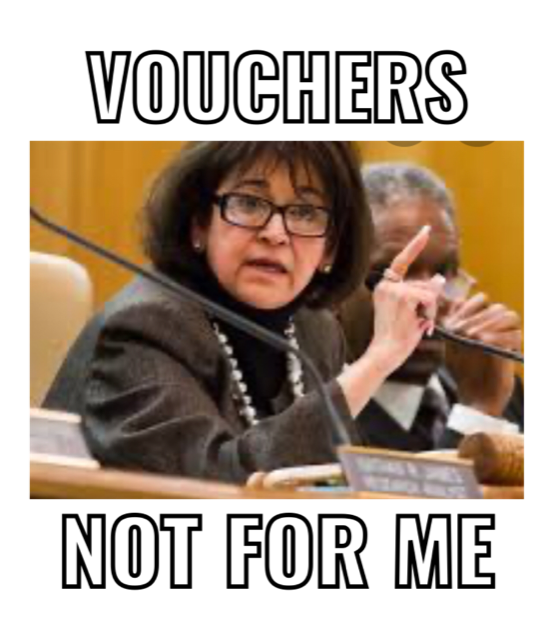
Haywood County Director of Schools Joey Hassell takes outgoing Senate Education Committee Chair Dolores Gresham to task for her comments suggesting school districts are obsolete:

For more on education politics and policy in Tennessee, follow @TNEdReport

Your support – $5 or more – makes publishing education news possible.

Senate Education Chair Not Seeking Re-Election

State Senator Dolores Gresham will not be seeking re-election this year, the AP reports:


Tennessee Republican state Sen. Dolores Gresham says she will not be seeking reelection this year.


The Somerville lawmaker made the announcement in an email this week to constituents in her 26th District.


Gresham served six years in the state House before she was elected to three four-year terms in the Senate. She became Education Committee chairwoman as a freshman senator.

Gresham’s leadership was a critical element in securing passage of Tennessee’s school voucher program. In fact, in litigation filed by the school systems in Nashville and Memphis, reference is made to Gresham’s captaining of the voucher bill from the Senate floor.


Amendment No. 1 did not apply to Sen. Gresham’s home county of Fayette County or to any of the other six counties in Sen. Gresham’s district, despite Fayette County having two out of seven schools (28.6%) on the 2017 bottom 10% list and one out of seven schools (14.3%) on the 2018 list of priority schools.

For more on education politics and policy in Tennessee, follow @TNEdReport

Your support — $5 or more today — makes publishing education news possible.

Library Censorship Bill in Subcommittee TODAY

The Cities and Counties Subcommittee of the House Local Government Committee will hear HB2721 today at 3:30 PM. The bill is opposed by the American Library Association, as they explain the press release below.

Today the American Library Association (ALA) released the following statement regarding Tennessee HB 2721, which would require a parental oversight board to replace policies and library experts in the development of library collections and services.  Libraries that fail to comply with the proposed law may lose local funding, incur fines, and librarians and library workers may face jail time. 

The ALA stated the following:  

“Tennessee HB 2721 threatens library users’ freedom to read and violates our professional values and ethics expressed in the ALA’sLibrary Bill of Rights. If adopted, the bill would establish ‘parental oversight boards’ whose decisions about what others can read, view, and access in the library would be final. The bill would add layers of bureaucracy that compete with elected or appointed library boards and existing library policies that govern library collection development, programming, and meeting room use. The law jeopardizes library funding and imposes fines and jail time for librarians who violate the edicts of these untrained boards.

“The belief that a small group of parents know what is best for every family in their community denies the very real fact that each community is made up of families and individuals with diverse beliefs, identities and values. ALA supports the right of families and individuals to choose materials from a diverse spectrum of ideas and beliefs. Public libraries and their professional staff members already have in place the tools and procedures that will assist parents in selecting materials that fit their family’s information needs, while not censoring materials or infringing upon the rights of other families or patrons to choose and access the resources and programs  they want and need.

“ALA vigorously opposes HB2721 and other bills like it that advance censorship under the guise of parental control.”

For more on education politics and policy in Tennessee, follow @TNEdReport

Your support$5 or more today — makes publishing education news possible.

Donate

Faison Pushing for Teacher Pay Raise

House Republican Caucus Chair Jeremy Faison of Cosby has indicated he’ll be pushing for a significant pay raise for Tennessee teachers when the legislature reconvenes in 2020. WJHL has more:


“Our teachers are some of the hardest-worked people in Tennessee and I definitely see a raise coming in,” says House Republican Caucus Chair Jeremy Faison who was voted into the leadership position this past August.


Few doubt the K-12 teachers’ low pay compared to other states, but Representative Faison says the issue is especially acute in those districts away from urban areas.


“Our teachers in rural Tennessee are struggling,” said Faison in a recent interview. “If you are a single parent and you are a teacher and you have two kids, that’s like poverty wages.”

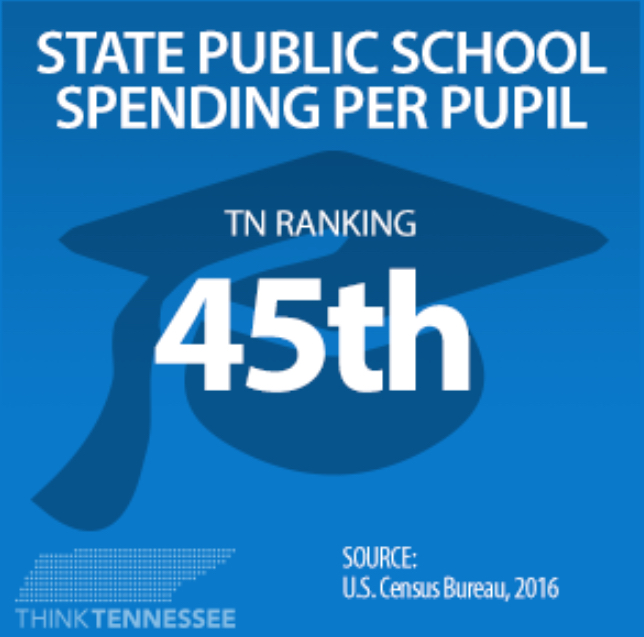
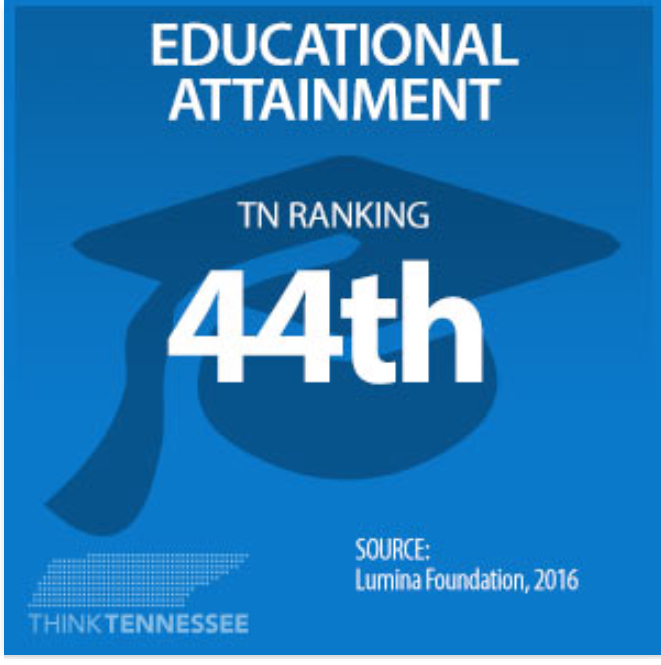
A recent analysis indicates that over the last 10 years, Tennessee has seen inflation-adjusted revenue growth of 7%. Over that same time period, teacher pay is down by 2.6%. That’s not surprising, given that Tennessee receives an “F” on a rating of funding effort for schools according to the Education Law Center.

In fact, Think Tennessee highlighted two important numbers relative to school funding in our state:

So, we’ve got some work to do — both in teacher pay and in overall investment in schools.

Back in 2014, I wrote about the state’s broken school funding formula, the BEP. The fact is, it’s still broken today. The solution propose then would also work now:


There’s an easy fix to this and it has been contemplated by at least one large school system in the state. That fix? Moving the BEP instructional component to the state average. Doing so would cost just over $500 million. So, it’s actually NOT that easy. Another goal of those seeking greater equity is moving the BEP instructional match from 70% to 75%, essentially fulfilling the promise of BEP 2.0. Doing so would cost at least $150 million.

The state should absolutely make a significant investment in teacher pay in 2020. We can afford it, with billions of dollars in surpluses coming in over the last five years. Frankly, we can’t afford NOT to do it. Ignoring the problem will just further exacerbate a growing teacher shortage.


For the past five years Tennessee has been running huge revenue surpluses as education needs go unmet. Over this five-year span the state collected nearly $3 billion more in general fund revenue than it anticipated. Last year alone the state general fund had a $580 million surplus. These are millions that could have gone to classrooms. 

Combining an improvement in teacher pay at a level of 5% or more with a move toward full funding of BEP 2.0 (a cost of some $500 million) would go a long way toward giving Tennessee teachers both the pay and resources they need. We have the money. The only question is will lawmakers like Faison find the collective political will to make the investment.

For more on education politics and policy in Tennessee, follow @TNEdReport

Your support$5 or more today — makes publishing education news possible.

Not a Single Member

Yesterday, the House Education Administration Subcommittee met for the first time. The meeting was the first chaired by admitted sex offender David Byrd.

Readers will recall that while both former House Speaker Beth Harwell and current Lt. Governor Randy McNally called on Byrd to resign from the legislature last year, current House Speaker Glen Casada gave Byrd a key leadership role on education policy.

At yesterday’s meeting, Byrd asked each committee member to introduce himself (the committee is made up of seven men) and state an interesting fact.

Each member proceeded to attempt humor. Not a single member used the opportunity to call on Byrd to resign from his committee leadership post. Instead, they acted as if having an admitted sex offender at the helm of a legislative committee was just business as usual.

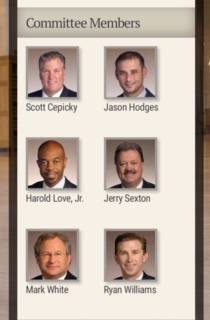
Here’s a link to the committee membership.

And here’s a picture of the six men who sat in silence while an admitted sex offender chaired a committee:

For more on education politics and policy in Tennessee, follow @TNEdReport

Support the work of education reporting!


Admitted Sex Offender Earns House Education Post

What a difference a year makes. Last year, former House Speaker Beth Harwell was calling on state representative David Byrd to resign amid allegations he had improper sexual relationships with high school students he had coached. Now, new House Speaker Glen Casada has appointed Byrd to Chair the House Education Administration Subcommittee.

The Tennessean has more:

Despite calls from protesters — and the previous House speaker — for his resignation, a state lawmaker accused of inappropriate sexual conduct against multiple teens has been named chairman of an education subcommittee.

Rep. David Byrd, R-Waynesboro, has been assigned by newly-elected House Speaker Glen Casada, R-Franklin, to lead the education administration subcommittee.

The announcement came Thursday when committees were assigned on the floor of the House, immediately following required sexual harassment training.

As the Tennessean story notes, Byrd was 28 and a basketball coach when he is accused of having inappropriate sexual conduct with two players who were then 15 and one who was 16. Despite Byrd’s denial of wrongdoing, a recorded phone call provided to Nashville’s WSMV-TV has Byrd apologizing to one of the women accusing him of misconduct.

The story also notes that in addition to Harwell, Lt. Governor Randy McNally called on Byrd to resign last year. Instead, Glen Casada has elevated Byrd to a key leadership role overseeing our state’s education policy.

Casada’s indifference to Byrd’s misconduct should come as no surprise to legislative observers. After all, Casada was well-known as mentor and adviser to former State Rep. Jeremy Durham, the first Tennessee House member ever to be expelled from the body. Durham was expelled after multiple credible allegations of sexual misconduct that took place during his short time in office.

Despite his penchant for enabling sex offenders, Casada received 75 votes in the Speaker’s race, including the support of Democrats Johnny Shaw, John Mark Windle, and John DeBerry. Republican Bob Ramsey was absent, but all other Republicans voted in favor of Casada. DeBerry, like Casada, is a long-time supporter of school vouchers – a priority apparently more important to him than protecting children from sexual predators. While Windle received a committee chairmanship, there’s no clear explanation for why Shaw supported Casada over Democrat Karen Camper.

Now, instead of being returned home to repent of his sins, Byrd will remain in the House and be a key player in state education issues.

For more on education politics and policy in Tennessee, follow @TNEdReport

Support education reporting!


Letters!

While district and school TNReady and TVAAS scores were released today, there’s an ongoing battle of letters between some educators and policymakers suggesting a pause in TNReady due to a history of problems and those who suggest that our state’s assessment is the reason for so much recent success.

Chalkbeat has the story on 11 Directors of Schools suggesting the state push forward with TNReady and 18 legislators from Nashville and Memphis who support the letter sent by Directors in those districts calling for a pause while the state transitions to a new Governor and Education Commissioner.

Here’s more:

“As members of the Tennessee General Assembly responsible for helping set policies and appropriate taxpayer funds for public education, we have been dismayed at the failed implementation of and wasted resources associated with a testing system that is universally considered — by any set of objective measures – to be a colossal failure,” said the letter, signed by legislators from Davidson and Shelby counties, where Nashville and Memphis are located.

Those who signed include: John Ray Clemmons, Bo Mitchell, Sherry Jones, Dwayne Thompson, Brenda Gilmore, Darren Jernigan, Antonio Parkinson, Jason Powell, Bill Beck, Mike Stewart, Barbara Ward Cooper, Larry Miller, G.A. Hardaway,  Karen D. Camper, Harold Love,  Johnnie Turner, Sara Kyle, and Joe Towns.

Meanwhile, a small group of Directors of Schools said:

“Test items and question types are directly linked to the standards and are pushing students to deeper critical thinking,” the email said. “The comprehensive accountability model holds schools and districts accountable for improved student performance…. Challenges remain, but together we must be positive as we continue the work.”

Superintendents from Maryville, Alcoa, Sevier, Johnson, Dyersburg, Loudon, Clinton, Marshall, McKenzie, Trousdale, and Lenoir signed the statement, which they said was also sent to McQueen.

Here’s a brief review of the last few years of testing in Tennessee.

2015 – TCAP tests (and quick score problems)

2016 — Online TNReady w/Measurement Inc. (disaster)

2017 — Paper TNReady with new vendor (Questar) — long delay before results are returned

2018 — Online TNReady II — this time, with dump trucks

How can you hold schools and districts accountable for improved student performance when you can’t consistently, reliably assess student performance?

What Dorsey Hopson, Shawn Joseph, and the group of lawmakers backing them are suggesting is simply to take a year to re-examine our testing program and take the necessary steps to get it right. All of them see some value in an annual assessment.

In fact, when addressing this issue and expressing his support for Hopson and Joseph, Maury County Director of Schools Chris Marczak indicated his support for moving to the ACT suite of assessments. Likewise, Wilson County Schools is seeking options that would allow the use of different assessments.

There may well be more letters as this discussion keeps moving.

For more on education politics and policy in Tennessee, follow @TNEdReport


Enough Already

Today, amid another round of testing problems, Williamson County Director of Schools Mike Looney tweeted:

Testing Update: TnReady testing challenges persist this morning. This has been the worst state testing process I have ever seen and it’s beyond ridiculous! Nevertheless, I am proud of WCS students and teachers for handling this with grace.

We’re now in the third week of the TNReady testing window and we’ve seen problems of some sort on a majority of those days. In fact, last week, Williamson County posted a list of TNReady problems by day:

Monday, April 16: Login problems affecting approximately 15,000 students.

Tuesday, April 17: Login problems affecting approximately 8,000 students.

Wednesday, April 18: WCS suspended testing to give the TDOE time to correct problems.

Thursday, April 19: Login problems affecting approximately 1,000 students.

Friday, April 20: No significant issues reported.

Monday, April 23: No significant issues reported.

Tuesday, April 24: System defaults caused 100+ students to take the wrong grade level test.

Wednesday, April 25: Delays and canceled testing affecting approximately 8,000 students.

Thursday, April 26: System lockout affecting approximately 15,000 students.

Friday, April 27: No significant issues reported.

That’s just one district, and the problems have been reported by a number of districts large and small across the state.

The Department of Education has blamed the problems on mysterious forces such as hackers and dump trucks, but it seems clear testing vendor Questar is not quite prepared for the job Tennessee is paying them $30 million this year to do.

Oh, and sometimes students get the wrong test.

All of this has caused an outcry among students, parents, and teachers. While one legislator says all the “whiners” should just suck it up, the TNReady trouble this year has caused legislators to take matters into their own hands, passing bills on “holding harmless” and “adverse actions” in order to make clear these tests should not negatively impact teachers, students, or schools.

One might recall that before our state’s testing window started, there was a bit of a warning that trouble might be headed our way. Despite the signs of potential trouble, Questar and the TN DOE expressed confidence in TNReady:

State officials said Thursday they are confident the new digital platform will work under heavy traffic, even as their new testing vendor, Questar, had headaches administering computer-based tests in New York on Wednesday. Some students there struggled to log on and submit their exam responses — issues that Questar leaders blamed on a separate company providing the computer infrastructure that hosts the tests.

It seems that confidence was misplaced.

I’ve talked with testing coordinators who tell me districts will be testing all the way up until graduation. I heard today that even when the login and submission problems were “resolved,” some students returned to their computers only to be issued a test for a subject other than the one they had started earlier in the day.

Student answers have been deleted or lost. Because of the legislation passed at the end of legislative session, TNReady will likely not count in many student’s grades. Teachers and administrators report that whether the scores count or not, students have no confidence in the system and no longer take the test seriously.

Even today, as I began seeing reports of issues around the state, I realized that TNReady being down is no longer news, it’s the norm.

Of course, Tennessee has had some sort of problem with testing or test results for five years now, dating back to the last administration of TCAP.

Here’s what else I realized: This test will just keep going. No one will stop it. Governor Haslam has yet to seriously weigh-in and appears to be fully behind Commissioner McQueen despite years of testing failures. While Directors of Schools complain about the ridiculous excuses from DOE and poor execution from Questar, so far, no district has permanently suspended testing.

Representatives from the Department of Education told lawmakers last week that there will be some valid data from this administration of TNReady. They even said it with a straight face.

So, why won’t this stop? Will any district refuse to subject students to further testing in this environment? Who will finally stand up and say “Enough?”

For more on education politics and policy in Tennessee, follow @TNEdReport
Keep the education news coming by becoming a Patron!


Bump in the Road

While one Tennessee legislator refers to the TNReady trouble as a mere “Bump in the Road,” school districts around the state are stuck trying to pick up the pieces and move forward. Here’s an excerpt from a message to parents provided by Williamson County Schools with an outline of the challenges faced during TNReady testing so far:

On behalf of WCS, I want to apologize to you and your children for having to endure the State’s failed online testing program these past two weeks. We know that this has been difficult for everyone involved, and for that we are sorry.

State standardized testing has been required for decades in Tennessee. What has changed in the past few years is that the Tennessee Department of Education has been trying to transition to online testing. As many of you know, they have had massive difficulties with online administration of TNReady and high school End of Course exams (EOCs). These online problems have affected our grades 5-11.

Here’s a quick timeline of what our students and staff have undergone since State testing began last week:

Monday, April 16: Login problems affecting approximately 15,000 students.

Tuesday, April 17: Login problems affecting approximately 8,000 students.

Wednesday, April 18: WCS suspended testing to give the TDOE time to correct problems.

Thursday, April 19: Login problems affecting approximately 1,000 students.

Friday, April 20: No significant issues reported.

Monday, April 23: No significant issues reported.

Tuesday, April 24: System defaults caused 100+ students to take the wrong grade level test.

Wednesday, April 25: Delays and canceled testing affecting approximately 8,000 students.

Thursday, April 26: System lockout affecting approximately 15,000 students.

Friday, April 27: No significant issues reported.

That’s six days of problems over a two week testing period. Williamson County is now the third district (joining Knox and Anderson) to report students being given the wrong test.

This doesn’t look like a bump in the road, it looks like a huge mess. Thousands of students in just this one district have been impacted. Districts are now scheduling meetings to determine how to move forward in light of “hold harmless” and “adverse action” legislation.

Still, the Tennessee Department of Education insists that testing must keep going. A TDOE representative told House and Senate members this week that it was entirely possible to obtain valid data from this test administration.

We’ve supposedly had hackers and dump trucks running around trying to stop the test.

Still, Candice McQueen and her Department, backed by Governor Haslam, insist we simply MUST keep testing.

Why?

Whenever the idea of stopping testing is brought up, the state says we will lose federal money. Even this week, amid legislative wrangling on the issue, the final proposal was adopted as means of preserving compliance with federal law.

Here’s how Chalkbeat reported it:

The language in both bills seeks to keep Tennessee’s school accountability plan in compliance with a federal education law that requires states to include student performance in their teacher evaluation model — or risk losing federal funding for schools. Lawmakers also cited the state’s tenure rules in preserving the data.

So, what’s the real risk?

There isn’t one. If Tennessee stops testing this year and doesn’t include the data at all in teacher evaluation, we’d only be violating the plan we wrote, not some federal mandate. It was Tennessee’s ESSA plan that spelled out how our state planned to use data from testing. Certainly, a case can be made that testing didn’t go as planned this year, so we won’t use this year’s data.

Still, could we lose money?

No.

I mean, it’s not exactly THAT clear, but pretty much.

Here’s what I wrote on this topic back in 2016 (yes, we have testing problems all the time — as one person noted on Twitter, we’ve become the Cleveland Browns of state testing):

There’s just one problem: The federal government has not (yet) penalized a single district for failing to hit the 95% benchmark. In fact, in the face of significant opt-outs in New York last year (including one district where 89% of students opted-out), the U.S. Department of Education communicated a clear message to New York state education leaders:  Districts and states will not suffer a loss of federal dollars due to high test refusal rates. The USDOE left it up to New York to decide whether or not to penalize districts financially.

And here’s more on how the federal Department of Education rarely withholds funds from states over testing or accountability issues:

  1. In 2015 more than 600,000 students opted out of state tests around the country, including 20% of all students in NYS, and 100,000 students in New Jersey and Colorado. Here in Illinois, more than 40,000 students opted out, including 10% of all CPS students eligible for the test. In 2016, as a district, CPS still did not make 95% participation, and more than 160 individual CPS schools also had <95% participation on PARCC last year. And in New York State in 2016, more than 9 out of 10 school districts had less than 95% participationNo state, district or school lost a single penny—despite threats throughout testing season every year since mass opt out began.  In fact, as mentioned above, no state or local educational agency has lost any funding for participation rates ever. And states have had participation below 95% in the past (particularly in demographic subgroups), even before the era of mass opt out campaigns.
  2. In 2015 the IL State Board of Education (ISBE) opted out the entire state from science testing. States must administer science testing by grade-span (i.e. once in 3-5th, once in 6-8th, once in high school). There was a 0% participation rate. No funding was lost. The US Department of Education (USED)’s response was described by the Chicago Tribune as a ‘crackdown‘. In fact, the ‘crackdown’ was a stern letter, informing the state that they needed to administer a science test the next year.

So, will we lose money because we tried to administer a test but experienced a series of unfortunate events?

No.

No we will not.

Still, the Tennessee Department of Education insists that our students, teachers, and schools persist.

Still, TDOE insists the data is somehow valid and useful.

The fact is, TNReady has not been. Not in 2016, not this year, not yet.

For more on education politics and policy in Tennessee, follow @TNEdReport
Keep the education news and analysis coming!