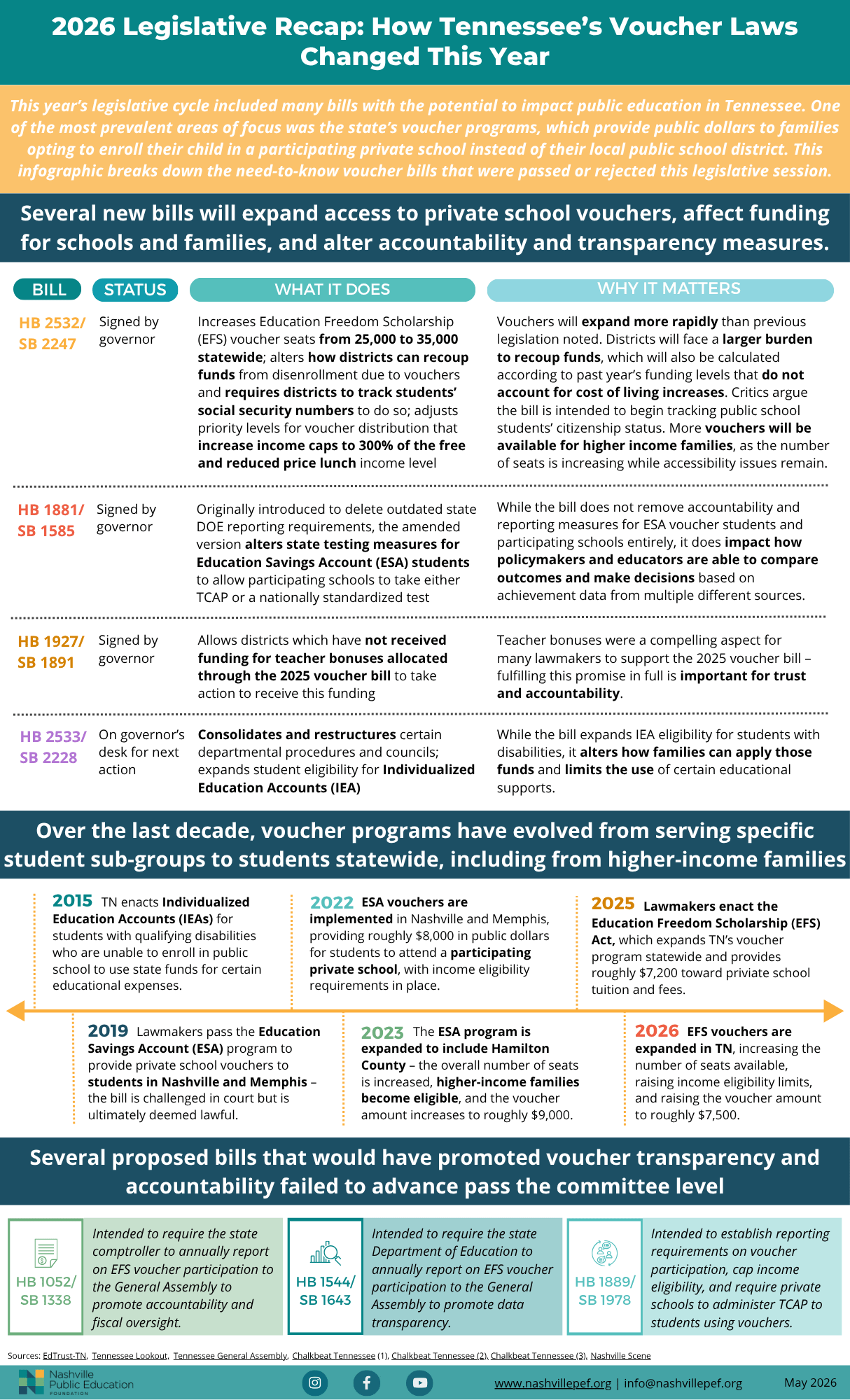
The Nashville Public Education Foundation (NPEF) released an infographic explaining what happened with school vouchers in the 2026 legislative session.
In the email announcing it, they said:
One of the most prevalent areas of focus in the 2026 Tennessee legislative cycle was the state’s voucher programs, which provide public dollars to families opting to enroll their child in a participating private school instead of their local public school district. Our latest infographic breaks down the need-to-know voucher bills that had an impact on accountability, access, and transparency.
The most significant voucher bill this year expanded Tennessee’s Education Freedom Scholarship vouchers, which are available to families statewide, from 25,000 seats to 35,000 seats. The bill also changed how school districts can recoup per pupil funds lost due to disenrollment.
As a result:
- Districts can only recoup funds that they can show were lost as a direct result of voucher participation.
- Districts must track students’ social security numbers as part of this process, which they currently do not do.
- Recouped funding will be calculated according to the past year’s funding levels, which would not account for cost of living increases.
These changes add a great deal of administrative burden to districts to recoup funds and alter a previous hold harmless provision that helped ensure school districts would not lose money from one year to the next. This bill also adjusted the income limits for EFS vouchers, making them more accessible for higher-income families.
Other proposed legislation was intended to increase transparency and accountability surrounding the usage of voucher programs, particularly regarding the socioeconomic levels of families enrolling in voucher programs, and in the learning outcomes of participating students. However, these bills failed at the committee level and did not proceed for a full vote.