Community Groups Call for Increased School Funding

In a state that continues to earn failing grades in school funding, community groups in Nashville, Memphis, and Chattanooga are calling on Gov. Bill Lee and legislative leaders to both increase school funding and update the BEP with a focus on equity.

Here’s an open letter penned by the groups:

To Governor Lee, members of the General Assembly, the Funding Review Central Steering Committee, and Chairs of the Education Funding Review Subcommittees: 

In August, Nashville Organized for Action and Hope (NOAH) and our sister organizations, Memphis Interfaith Coalition for Action and Hope (MICAH) and Chattanoogans in Action for Love Equality and Benevolence (CALEB) gathered for a Day of Power and Prayer to call for increased funding of education statewide. We heard from educators, students and advocates from across the state and used the collective power of our voices to highlight the urgent needs of our students in a time where they face incredible odds, but are still asked to succeed. We recognize we cannot ask more of students unless we are willing to increase our investment in them. 

We applaud Governor Lee for calling for a full review of the state’s education funding formula and to explore possibilities for a more student-centered approach. We consider education equity to be one of our highest priorities and are encouraged that there will be a statewide effort to ensure that community input will be provided in the creation of a new funding framework. 

Currently, Tennessee ranks 46th nationally in education spending. Sadly, we spend more to incarcerate adults than we do to educate our children. If Tennessee is serious about improving the education of our children and the future of all Tennesseeans, then we must ensure that the education framework we create now reflects education components that are inclusive of the needs of all children across the state. 

As such, NOAH, MICAH and CALEB will continue to advocate for the following items to be prioritized in the new funding formula: 

● Funding for Classroom Technology 

● Funding for Lower Student/Teacher Ratios 

● Funding for Professional Development for Teachers 

● Funding for Social Worker, School Counselor, and Nurse ratios that mirror national recommendations 

● Funding that adequately address the needs of low-income students, English learners, and students with disabilities, in order to produce predictable, equitable allocations to every school district

Additionally, we ask that the committees not simply “re-slice” the funding pie. Tennessee experienced a $2 billion surplus last fiscal year. Imagine what progress we could make if we were to substantially increase the dollars available for our schools. The time is now to ensure that we increase education funding in an effective way that goes beyond simply re-allocating dollars. We must be courageous in recognizing that there are no frugal shortcuts to improving education in Tennessee. If we say we value our children, then we must do so through our actions and deeds, and that begins by investing more in our children and the future of Tennessee.

crop unrecognizable woman serving delicious pie on table
Photo by Marko Klaric on Pexels.com

For more on education politics and policy in Tennessee, follow @TNEdReport

Your support – $5 or more – makes publishing education news possible.

The BEP Voucher Plan

Tennessee teacher and education blogger Mike Stein offers his take on Gov. Bill Lee’s latest run at school vouchers. This time, Lee’s plan appears to be to use the state’s school funding formula (BEP) to create a voucher scheme.

Here are some highlights from Stein’s piece, written after he’d been to one of TN DOE’s BEP Town Hall events:

I had so much to say! I wanted to mention how atrocious it is that in 2021 teachers in this state are still limited on how many copies they can make for their classrooms. I wanted to go into how students’ mental health is poor. That fights during school are on the rise because they don’t know how to properly deal with their emotions and the need for school counselors, psychologists, and social workers is at a critical point. I wanted to mention my idea for attacking the substitute teacher crisis in Tennessee, which is to include substitute teacher pay as a component in the BEP. Rural systems like mine can not afford to pay them a decent wage (they can literally make more money at any fast food establishment), so if TDOE creates a baseline pay of $120 per day for non-licensed substitute teachers that is reimbursed to districts, then we will be much more likely to attract and keep quality substitute teachers. The $120 figure comes from paying them the equivalent of $15 an hour for the length of the school day. If the substitute is a certified teacher, then I believe that amount should equal $160 per day. I wanted to raise these points–and more–but the two minute time limit had me rethinking what I was going to say.

Is the answer already decided?

. . . because in January they plan on presenting their new BEP formula to the state legislature

Stop and reflect on that last sentence. If their timeline is to present their plan in January then it can only mean one thing–it’s either already written or close to it. This means that TDOE’s public town halls and their funding review committees are either entirely or mostly a farce. They’re going through the motions of eliciting public feedback because to redo the BEP formula without attempting to do so would mean their suggestion in January would most assuredly be D.O.A.

The tea leaves are not difficult to read here. The new BEP formula will include some form of vouchers (they, of course, won’t be called that) and because the BEP funds public schools across the state, then it will not violate the “Home Rule” provision. State legislators will be put in a position to either vote in favor of the new BEP formula (which will undoubtedly include actual needed improvements that will be popular with their constituents) or reject it. It’s a lose-lose situation for them. Either support the new BEP formula that will actually privatize public schools or be accused of being against public education. 

Stein then does a great job of breaking down the members of the Fiscal Responsibility Committee – noting that many of them are decidedly pro-voucher.

Check out his post for more on Bill Lee’s continued effort to send public money to private schools.

For more on education politics and policy in Tennessee, follow @TNEdReport

Your support – $5 or more – makes publishing education news possible.

Nashville Voters Say Schools are Underfunded, Teachers Underpaid

Amid a global pandemic that is seeing an already troubling teacher shortage exacerbated, voters in Nashville are expressing concern that schools are underfunded and teachers are underpaid. These findings come as the result of a poll of registered voters conducted on behalf of the Nashville Public Education Foundation.

The poll found that voters (72%) believe teachers are underpaid – this in spite of a recent pay plan raising pay in Nashville some $7000 or more for most teachers. The pollster noted that previous results showed 80% of voters thought teachers were underpaid.

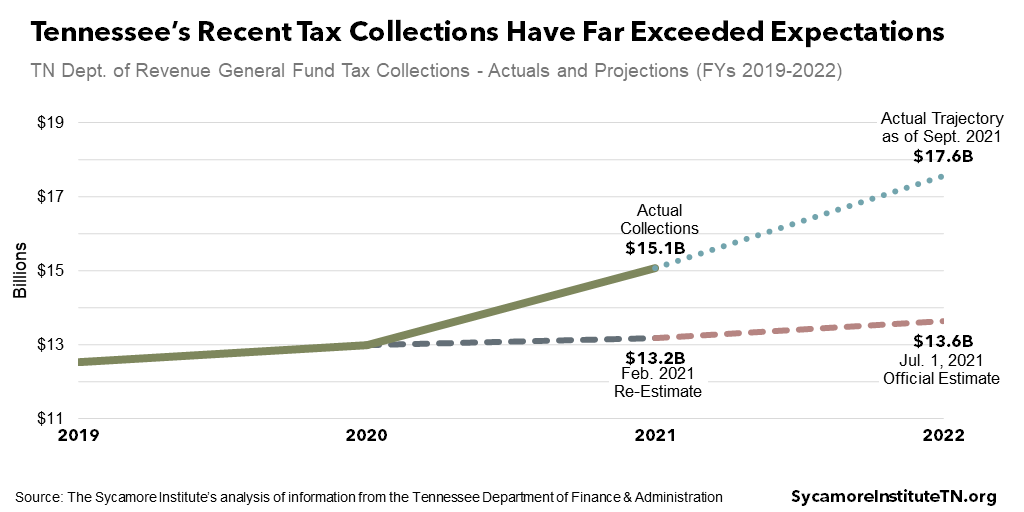
The findings on funding are not surprising in a state that had a $2 billion surplus in the past fiscal year and is underfunding schools by at least $1.7 billion.

According to the poll, 66% of Nashville voters feel public schools in the city are underfunded.

Meanwhile, Gov. Bill Lee is attempting to divert attention from his party’s dismal track record on school funding by pushing a statewide “review” of the school funding formula, known as the BEP.

What Lee and legislative leaders are not (yet) talking about is a dramatic increase in state funding for schools. Of course, there’s a February court date that may result in the Tennessee Supreme Court ordering policymakers to properly invest in schools.

abundance bank banking banknotes
Photo by Pixabay on Pexels.com

For more on education politics and policy in Tennessee, follow @TNEdReport

Your support – $5 or more – makes publishing education news possible.

New State Commission Pushes Charters on Nashville

Gov. Bill Lee won approval of a “super charter commission” back in 2019. Now, that commission is imposing an unwanted charter school on Nashville.

The Commission voted today to overturn the decision by the MNPS School Board to reject the charter application from Nashville Classical, which already operates an elementary and middle school in East Nashville. The new school is proposed for West Nashville.

Nate Rau has a great explainer on the fight over Nashville Classical in the Tennessee Lookout.

Nashville Classical, which has already been rejected once by the school board with a 7-1 vote, submitted its appeal last week.

But, the starting point for the local debate over Nashville Classical’s application is a new state law that says the Nashville school board’s decision is functionally irrelevant. If the appeal is rejected, as expected, the school can simply appeal to the new Republican-backed state charter school commission, which would likely grant its approval. Unless a political meteor strikes and creates some unforeseen circumstance, Nashville Classical will be open to enrolling kindergarten beginning next year.

This was written back in June. Now, here we are in mid-October, and Nashville Classical has gained the predicted approval from the Charter Commission.

This should come as no surprise given Gov. Lee’s strong penchant for privatization.

School Board member Abigail Tylor is speaking out on the decision, but the reality is this type of top-down privatization is exactly what Bill Lee wants and exactly why the super charter commission was started.

For more on education politics and policy in Tennessee, follow @TNEdReport

Your support – $5 or more – makes publishing education news possible.
TEA Talks BEP Reform

Last week, Gov. Bill Lee made a so-called “major” announcement about plans to reform the state’s school funding formula – the BEP. I’ll have more on this development later.

For now, though, here’s the statement from Tennessee Education Association (TEA) President Beth Brown:

“The Tennessee Education Association supports Gov. Lee’s intent to engage educators, parents and community members in a critical evaluation of the state’s education funding formula. However, the central problem with education funding is not the BEP, but the inadequate level of state funding.

Tennessee ranks 46th in the nation for what we invest per student. It is irresponsible and harmful to Tennessee children to continue the pattern of insufficient state investment in our schools, especially at a time when Tennessee has the largest revenue surpluses in state history. We can and must do better for our students.     

Any review of the BEP funding formula must include more than recommendations on how to change the formula. Until the state makes a significant increase in public education funding to address many challenges plaguing our schools, updating a formula will not get us where we need to be to provide the high-quality public education Tennessee children deserve.”

cardboard illustration of paper money and coins on blue background
Photo by Gabby K on Pexels.com

For more on education politics and policy in Tennessee, follow @TNEdReport

Your support – $5 or more – makes publishing education news possible.
Unfazed

Gov. Bill Lee responded to three losses in court last week by doubling down on the executive order that landed him in court and allows parents to opt-out of local school district mask mandates.

Of course, as a result of the court orders, the opt-out is essentially meaningless in the districts where the suits originated. Still, Lee is persisting in renewing an executive order he has previously admitted his administration has no intention of enforcing.

Chalkbeat has more on the renewal:

Gov. Bill Lee said Thursday he’ll extend his executive order allowing parents to opt their children out of following local school mask mandates that protect them against the coronavirus.

The 30-day extension will come despite rulings by three federal judges blocking his Aug. 16 executive order, which is due to expire on Oct. 5.

The judges in Memphis, Nashville, and Knoxville sided with some parents who said the governor’s order violates federal law by creating unsafe learning environments for students with disabilities who are more at risk of severe illness from COVID.

The move by Lee comes even as a new CDC report indicates that Tennessee has lost the most school days of any state due to closures related to COVID-19.

The Tennessean has more:

Unsurprising to many students and parents, Tennessee has seen the most COVID-related school closures so far this school year according to a new Centers for Disease Control and Prevention study published. 

From Aug. 2 to Sept. 17, Tennessee saw more than 400 schools close for at least one day, according to the study released last week.

The New York Times reports that Lee’s continued non-response to COVID-19 is the result of a desire to avoid a challenge from the extreme right of his party, citing GOP state Senator and Dr. Richard Briggs from Knoxville:

“The governor [Bill Lee] understands completely the seriousness of the problem, and I think that hard decisions are being tempered by political realities, which is that he has an election next year,” and “Dr. Briggs described the surge of cases in Tennessee as a “completely self-inflicted crisis.”

For more on education politics and policy in Tennessee, follow @TNEdReport

Your support – $5 or more – makes publishing education news possible.
Lee Strikes Out

Governor Bill Lee has lost in all three federal district courts in Tennessee in his attempt to prevent universal masking mandates in public schools. Yesterday (9/24), Lee lost in the East and Middle districts of Tennessee and he had already lost in the West district.

Meghan Mangrum and Mariah Timms have more in the Tennessean on the court ruling in Middle Tennessee:

Williamson County and Franklin Special schools will be able to enforce mask mandates under a ruling Friday from a federal judge in Nashville. 

U.S. District Judge Waverly D. Crenshaw, Jr. issued the order in the afternoon, blocking Gov. Bill Lee’s executive order allowing parents to opt their children out of the district’s mask mandates. 

The judge’s decision is temporary, lasting until 11:59 p.m. on Oct 5, the same time as Lee’s order is set to expire. On Friday, the governor told reporters he hasn’t yet decided on whether to renew the executive order. 

In spite of the setbacks in court designed to maximize student safety by mitigating COVID spread, Lee has indicated he may renew his order. Of course, that would be a moot point in at least Shelby and Knox County’s, as the rulings there overrule the opt-out approach Lee is promoting.

Nashville state Senator Jeff Yarbro pointed out Lee’s losing streak in a tweet:

It’s unclear why Lee would persist with a model he suggests he has no plans to enforce and which judges have ruled essentially unenforceable.

and now the governor says he isn’t planning to take action against districts that don’t comply with his order on mask opt-outs.

Something about you can’t please all the people all the time comes to mind.

close up photography of four baseballs on green lawn grasses
Photo by Steshka Willems on Pexels.com

For more on education politics and policy in Tennessee, follow @TNEdReport

Your support – $5 or more – makes publishing education news possible.

Mask Mandate Mandatory

A federal judge has ordered Knox County Schools to mandate masks with no opt-out in order to protect student safety. The move follows a recent order by a federal judge that Shelby County Schools may enforce a mask mandate with no opt-out in defiance of Gov. Bill Lee’s executive order requiring an opt-out option.

The Knoxville News-Sentinel has more:

Knox County Schools must require all staff and students to wear masks in schools while a lawsuit by families of disabled children plays out, a federal judge ruled Friday. The ruling takes effect immediately. 

U.S. District Judge J. Ronnie Greer also blocked Gov. Bill Lee’s executive order allowing Knox County Schools parents to opt out of the mask mandate. The judge’s ruling only applies to the school district.

The governor’s executive order was already set to expire Oct. 5. Jessica Salonus, a lawyer representing the four families who are suing the Knox County Board of Education and the governor, said that even if Lee extends his opt-out order, it still won’t apply in Knox County.

A similar lawsuit is now pending in Williamson County.

The rulings in Shelby and Knox counties mean that Lee’s opt-out order is essentially a moot point in two of the state’s four largest school districts.

boy running in the hallway
Photo by Caleb Oquendo on Pexels.com

For more on education politics and policy in Tennessee, follow @TNEdReport

Your support – $5 or more – makes publishing education news possible.

Sumner County to Ask for Flexibility in COVID Response

After closing for an entire week due to COVID-19, the Sumner County School Board is poised to vote on a resolution asking Gov. Bill Lee and the Tennessee General Assembly to grant additional flexibility to school districts in dealing with the pandemic.

The move in Sumner County even as parents in districts across the state are suing Lee over his executive order allowing students/parents to opt-out of local mask mandates.

Sumner County does not have a mask mandate in effect in the district. However, they are asking for the ability to move to hybrid or remote learning options should COVID outbreaks create a burden on the system in terms of student/faculty/staff absences.

Here’s more on the proposed resolution from the Hendersonville Standard:

After closing the district’s 49 schools last week due to COVID-19, the Sumner County Board of Education will likely vote on Tuesday to ask state legislators to reinstate some of the flexibility they had during the previous school year with hybrid and remote learning.

Director of Schools Dr. Del Phillips presented a resolution to school board members during a study session on Sept. 7.

The resolution urges the Tennessee General Assembly and the state Board of Education to reinstate some flexibility for local school boards to transition districts to hybrid or remote learning for a short, specified period of time in order to combat any future variants or surges of COVID-19.

House Majority Leader William Lamberth, who represents a part of Sumner County in the General Assembly, said he was open to legislative consideration of the resolution. It’s worth noting, though, that Lamberth is also supportive of Lee’s mask opt-out.

House Majority Leader William Lamberth (R-Portland) says he’s open to considering the school board’s resolution should it pass next week.

However, he says Gov. Lee and state Republicans have made their preference for in-person learning very clear.

“Our preference is that they do everything they can to keep kids in school,” he said.

Given the current status of the lawsuit against Lee’s order in Shelby County and the advice of medical professionals regarding mitigating the spread of COVID-19, it seems that doing “everything possible” in order to ensure children are in school would include a mask mandate.

Such mandates are in effect in Davidson, Wilson, Rutherford, and Williamson counties in middle Tennessee.

For more on education politics and policy in Tennessee, follow @TNEdReport

Your support – $5 or more – makes publishing education news possible.

Lawsuits Stacking Up as Lee’s COVID (Non)Response Makes Matters Worse

Lawsuits from parents in Williamson and Knox counties are challenging Gov. Bill Lee’s executive order allowing opting out of a school district’s mask policy. The suits are similar to a suit from Shelby County parents. In the Shelby County suit, a judge today granted an injunction preventing Lee’s opt-out plan from going forward.

Meghan Mangrum has more on the Williamson County suit in the Tennessean:

The lawsuit, filed Friday in U.S. District Court in Nashville, names the governor, the Williamson County Board of Education and Franklin Special School District as defendants, alleging that the governor’s order “has failed to allow school districts to afford the reasonable accommodation of implementing a universal masking policy that does not contain a voluntary opt-out.”

In addition, the complaint alleges that the defendants’ actions “have pitted children against children, while placing the health and safety of medically vulnerable children with disabilities in danger” — a violation of the Americans with Disabilities Act and Section 504 of the Rehabilitation Act.

The Shelby County suit also cites the ADA. The injunction granted today only applies to students in Shelby County.

Meanwhile, parents in Knox County have also filed suit along similar grounds.

WBIR has more:

The mothers of four disabled or medically compromised Knox County students and two Knox County teachers say it’s imperative that the county impose a mask mandate for children and that the governor’s order allowing parents to opt out of such a measure be halted.

The mothers are suing Gov. Bill Lee and the Knox County Board of Education in U.S. District Court. The case is being heard in Greeneville by Senior U.S. District Court Judge Ronnie Greer.

woman holding sign
Photo by cottonbro on Pexels.com

For more on education politics and policy in Tennessee, follow @TNEdReport

Your support – $5 or more – makes publishing education news possible.